
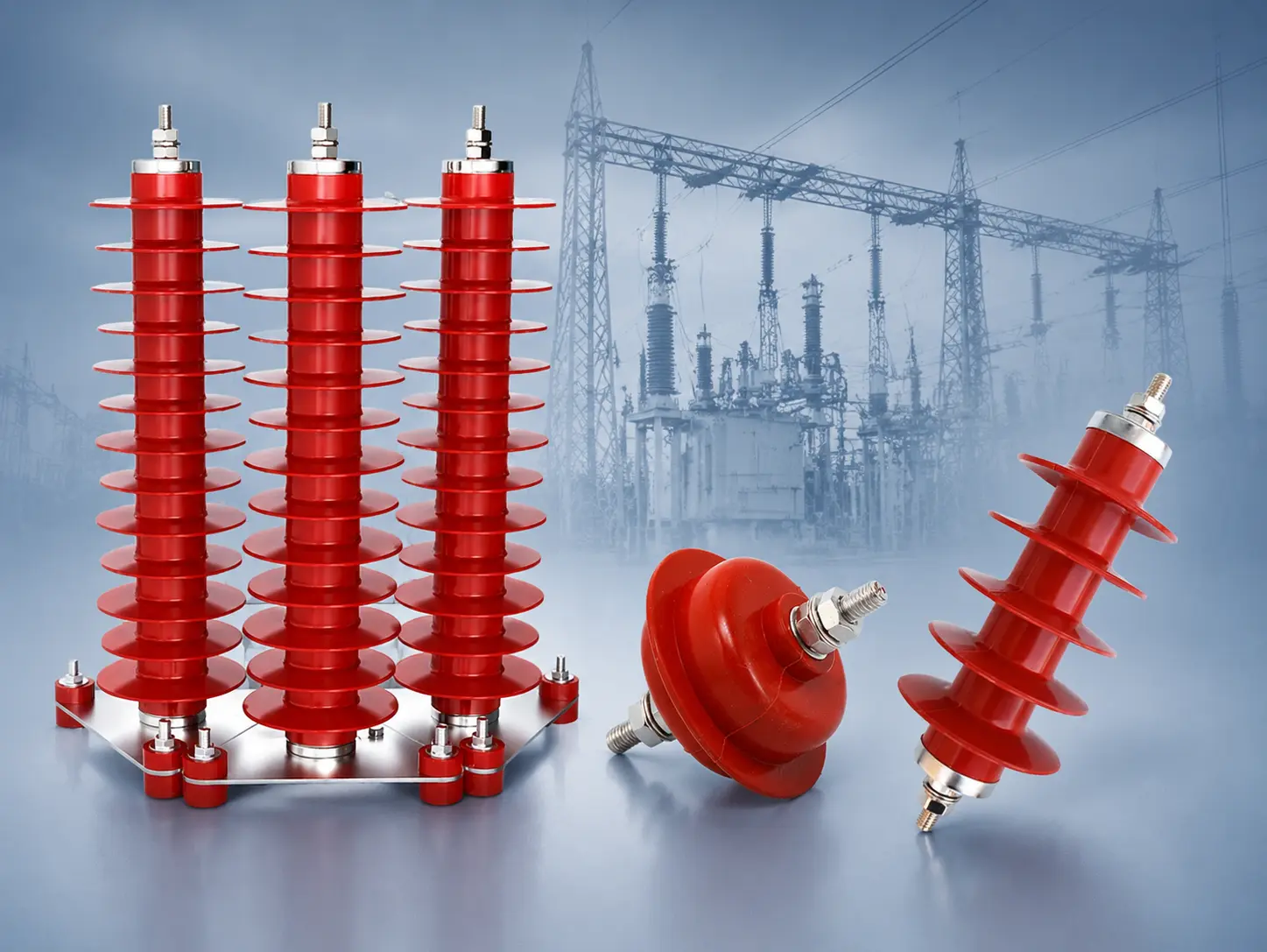
A surge arrester is an overvoltage protection device used to protect electrical equipment from lightning surges, switching surges, and other transient voltage events. It is installed so that, when a surge occurs, the surge current has a controlled path to ground instead of passing through the insulation of transformers, switchgear, cables, motors, or other protected equipment.
In simple terms, a surge arrester does not stop lightning and it does not absorb every electrical disturbance. Its job is to limit dangerous overvoltage to a safer level for the equipment nearby. To work correctly, the arrester must be selected according to system voltage, grounding method, discharge current, installation environment, and insulation coordination requirements.
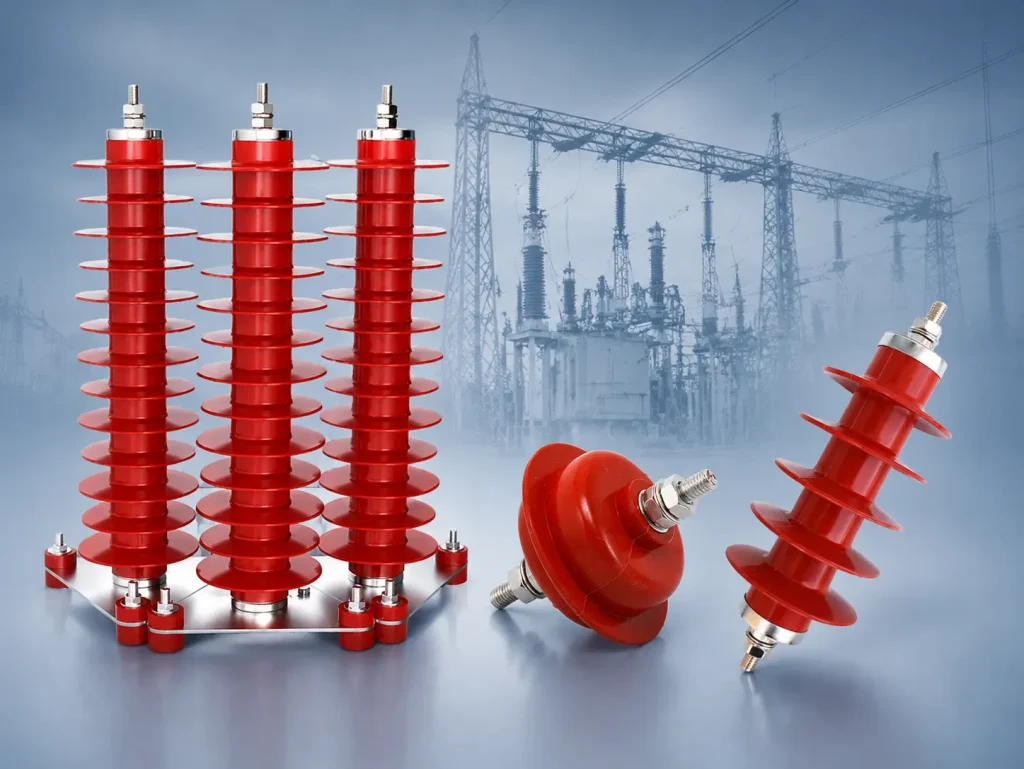
What Is a Surge Arrester?
A surge arrester is connected between an energized conductor and ground, or between conductors in some applications. Under normal operating voltage, it remains in a high-resistance state. When voltage rises sharply during a transient event, the arrester conducts surge current and helps clamp the voltage across the protected equipment.
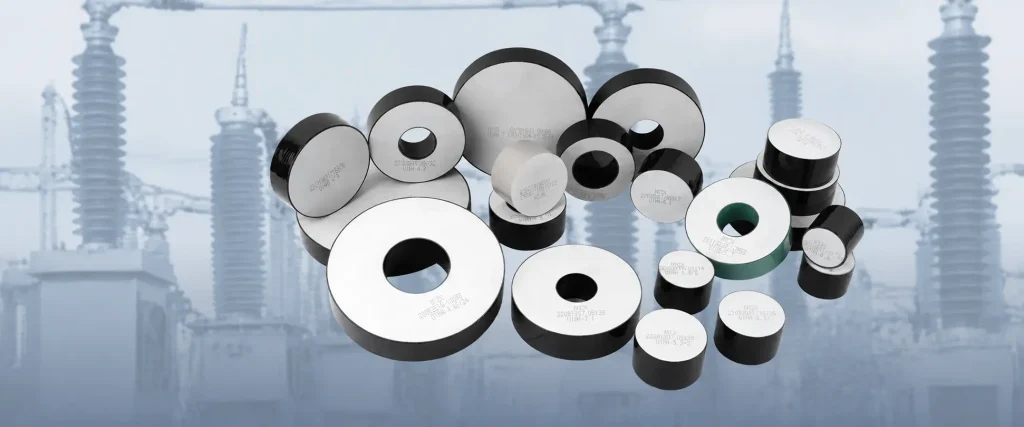
Modern power system arresters commonly use metal oxide varistor blocks, especially zinc oxide varistors. These materials have nonlinear resistance: they allow only small leakage current during normal operation but conduct heavily when the voltage exceeds the designed protection level.
For product options and voltage classes, see LEEYD zinc oxide lightning arresters.
How Does a Surge Arrester Work?
The working principle is based on controlled conduction. During normal system operation, the arrester stays almost non-conductive. During a lightning surge or switching surge, the voltage rises quickly. The arrester responds by lowering its resistance and discharging surge current toward ground.
After the surge passes, the arrester returns to its high-resistance state. This allows the system to continue operating while reducing the voltage stress applied to nearby insulation. A correctly selected arrester can reduce equipment failure risk, but it must be installed with short, reliable grounding connections and matched to the electrical system.
| Operating Stage | What Happens | Why It Matters |
|---|---|---|
| Normal voltage | The arrester carries only small leakage current | It does not interfere with normal system operation |
| Transient overvoltage | Metal oxide blocks conduct surge current | The voltage across protected equipment is limited |
| Discharge path | Surge current is diverted to ground | Equipment insulation receives less voltage stress |
| After the surge | The arrester returns to high resistance | The system can continue operating under normal voltage |
What Causes Surges in Power Systems?
Surges are short-duration overvoltage events. They may come from outside the system, such as lightning activity, or from inside the system, such as switching operations and faults. The arrester selection should consider the most likely surge sources in the actual installation.
- Lightning surges: caused by direct strikes or induced voltage on overhead lines.
- Switching surges: caused by breaker operation, capacitor switching, transformer energization, or load changes.
- Fault-related transients: caused by system faults, grounding changes, or abnormal operating conditions.
- Industrial disturbances: caused by large motors, drives, and heavy electrical equipment.
Main Types of Surge Arresters
Surge arresters can be described by voltage level, housing material, installation position, or internal technology. For medium-voltage and high-voltage power systems, zinc oxide or metal oxide surge arresters are widely used because of their fast response and stable protective characteristics.
| Type | Typical Use | Selection Note |
|---|---|---|
| Zinc oxide surge arrester | Distribution systems, substations, transformers, switchgear | Common choice for modern power protection |
| Polymer-housed arrester | Outdoor distribution and industrial environments | Lightweight and suitable for many outdoor applications |
| Porcelain-housed arrester | Utility and high-voltage applications | Often selected where project standards require porcelain housing |
| Low-voltage surge protection device | Control panels, buildings, low-voltage equipment | Different product category from medium-voltage arresters |
| GIS surge arrester | Gas-insulated switchgear systems | Specialized application, not the main focus for standard distribution projects |
If you are comparing zinc oxide and metal oxide terminology, our zinc oxide surge arrester guide explains the construction, applications, and selection points in more detail.
Where Are Surge Arresters Used?
Surge arresters are usually installed close to the equipment they protect. Short connection leads and a good grounding path are important because long leads can increase voltage stress during fast surge events.
- Distribution transformers: to protect transformer insulation from lightning and line surges.
- Medium-voltage switchgear: to reduce incoming transient overvoltage.
- Overhead distribution lines: to reduce failures caused by lightning-induced surges.
- Substations: to protect transformers, breakers, busbars, and connected equipment.
- Industrial power systems: to protect electrical equipment in factories, mining, energy, and infrastructure projects.
For projects around 10kV systems, read our 10kV lightning arrester selection guide.
Surge Arrester vs Lightning Arrester
The terms surge arrester and lightning arrester often overlap. A lightning arrester is usually discussed when the main concern is lightning overvoltage. Surge arrester is a broader term that also includes switching surges and other transient overvoltage events.
In modern power systems, the actual product may be the same zinc oxide or metal oxide arrester. The correct selection depends less on the name and more on the system voltage, discharge current, residual voltage, housing material, and installation method. For a focused comparison, see surge arrester vs lightning arrester.
Key Specifications to Confirm
Before selecting a surge arrester, confirm the operating conditions and protection requirement. A similar-looking arrester may have a different voltage rating, discharge current level, housing material, and installation structure.
| Specification | Why It Matters |
|---|---|
| Rated voltage | Must match the system and insulation coordination requirement |
| Continuous operating voltage | Prevents overheating under normal operation |
| Nominal discharge current | Indicates surge current handling capability |
| Residual voltage | Affects the actual protection level of equipment insulation |
| Housing material | Affects mechanical strength, environment resistance, and project compliance |
| Installation method | Determines terminal, bracket, and grounding arrangement |
| Monitoring accessories | Surge counters or monitors may be required for maintenance programs |
For substation or utility projects, surge arresters may also be combined with arrester monitoring solutions to record discharge events or observe leakage current.
FAQ
What is the main purpose of a surge arrester?
The main purpose is to limit transient overvoltage and discharge surge current so that nearby electrical equipment receives less voltage stress.
Does a surge arrester stop lightning?
No. A surge arrester does not stop lightning. It limits the overvoltage caused by lightning or switching events and diverts surge current through a controlled path.
Where should a surge arrester be installed?
It should be installed close to the protected equipment with short connections and reliable grounding. Exact placement depends on the system design and project standards.
What is the difference between a surge arrester and a surge protector?
In general usage, surge protector often refers to low-voltage protection devices for electronics or panels, while surge arrester is commonly used for power distribution, transformer, switchgear, and substation protection.
What information should I provide for arrester selection?
Please provide voltage level, system grounding method, installation location, nominal discharge current requirement, housing preference, accessories, quantity, and any existing model or drawing. You can contact LEEYD for selection support.