
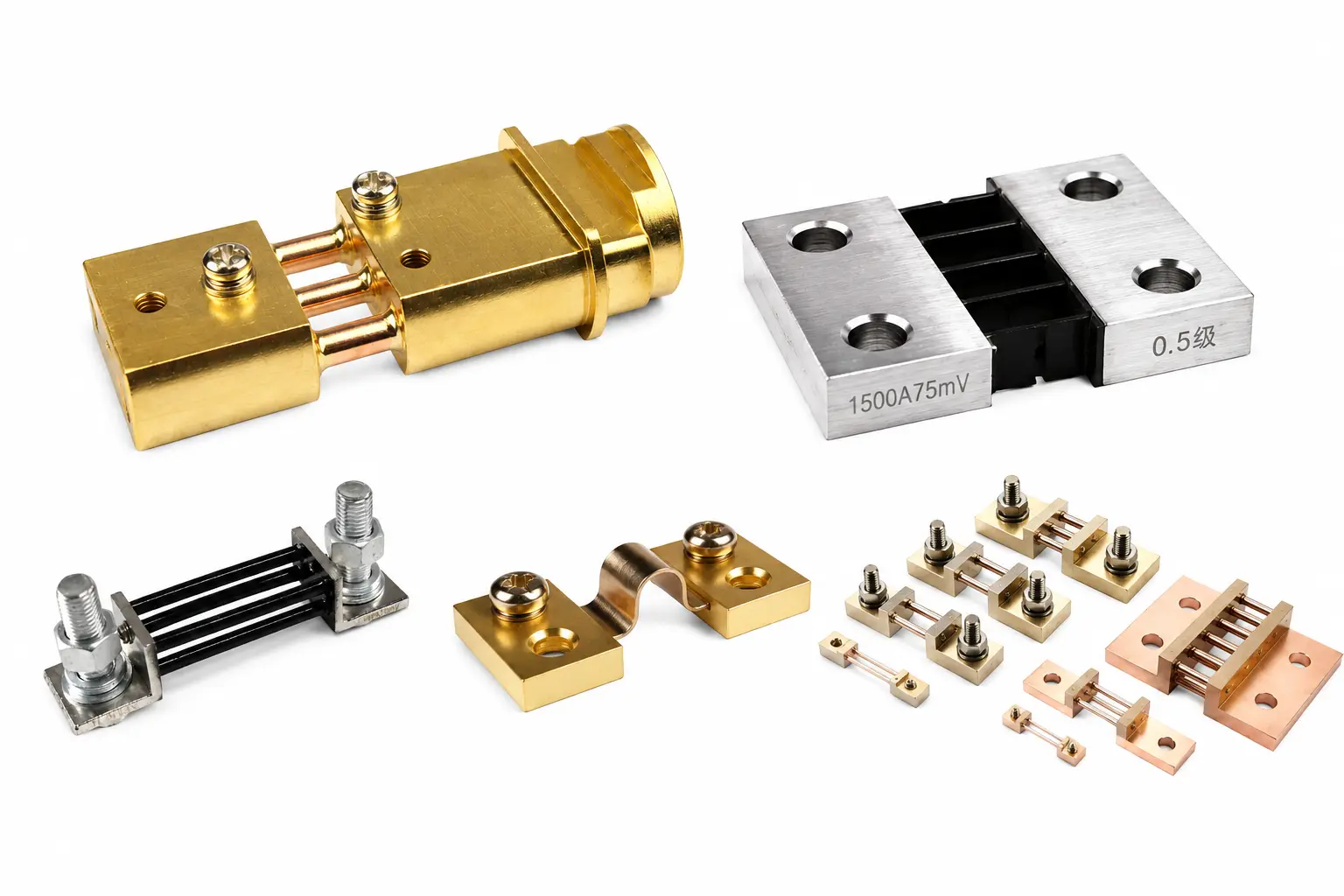
A DC current shunt is a precision low-resistance component used to measure direct current in high-current electrical systems. Instead of sending the full current through a meter, the shunt creates a small, proportional millivolt signal that the meter, controller, or monitoring device can read.
For engineers and buyers, the real question is not only what a DC shunt does, but how to choose a shunt that matches the current range, voltage drop, accuracy requirement, installation space, and operating conditions of the equipment.
This guide explains the key factors to confirm before selecting a DC current shunt for applications such as welding equipment, battery systems, EV and energy storage systems, switchgear, industrial power supplies, and test equipment.
What Is a DC Current Shunt?
A DC current shunt, also called a DC shunt resistor or ammeter shunt, is installed in series with the current path. When current flows through the shunt, a small voltage drop is produced across its sensing terminals. This voltage drop is proportional to the current.
For example, a 500A 75mV shunt is designed to produce 75mV when 500A flows through it. The connected meter or control system reads this millivolt signal and converts it into a current value.
In practical terms, the shunt helps the system measure large DC currents without routing the full current through sensitive instruments.
Where Are DC Current Shunts Used?
DC shunts are used anywhere large direct current needs to be measured, monitored, or controlled. Common applications include welding equipment, battery systems, EV and energy storage systems, switchgear, industrial power supplies, test equipment, and DC ammeters.
If you are looking for product options, LEEYD supplies standard and custom DC current shunts for industrial current measurement applications.
Key Specifications to Confirm Before Choosing a DC Shunt
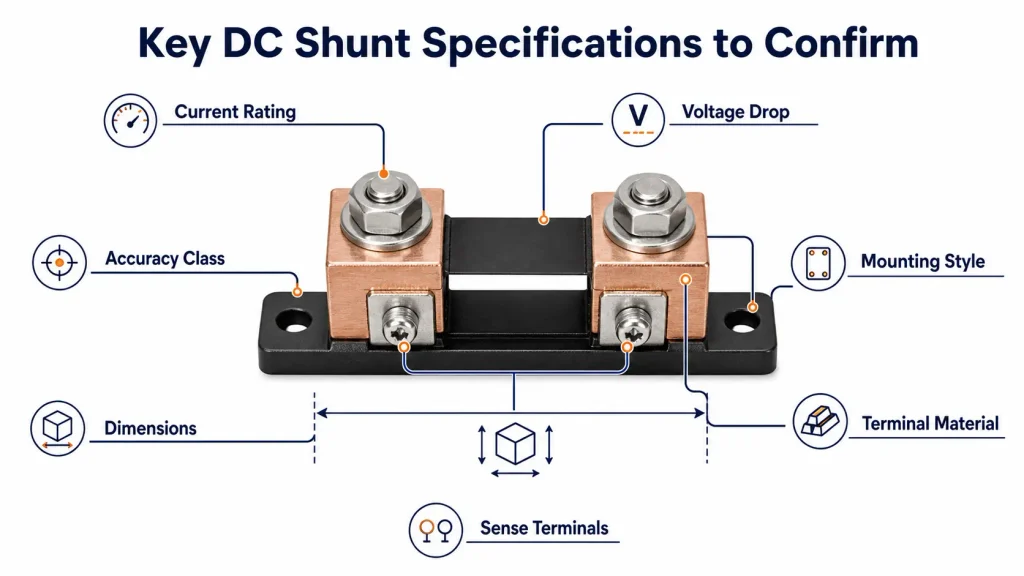
Before selecting a DC shunt, confirm the electrical, mechanical, and application requirements. These details help determine whether a standard model is suitable or whether a custom design is needed.
| Specification | What to Confirm |
|---|---|
| Rated current | Continuous current and possible overload or peak current |
| Voltage drop | Common outputs include 40mV, 50mV, 60mV, 75mV, 100mV, or custom values |
| Accuracy class | Measurement precision required by the meter or control system |
| Operating conditions | Ambient temperature, duty cycle, ventilation, and thermal rise |
| Mounting style | Base mounted, busbar mounted, panel mounted, or custom structure |
| Terminal layout | Main current terminals and separate sensing terminals |
| Dimensions | Available installation space and mounting-hole positions |
How to Choose the Right Current Rating
The rated current of the shunt should match the maximum continuous current of the circuit, not only the nominal current. If a system normally operates at 300A but may reach 450A during short peaks, the shunt should be selected with enough margin for the real operating condition.
When choosing the current rating, consider continuous operating current, short-term peak current, duty cycle, heat dissipation space, and whether the system needs overload margin.
For applications where the current profile changes quickly, such as welding equipment, the shunt should be selected with the real working cycle in mind. LEEYD also provides information on DC current shunts for welding if your project involves welding machines or welding current monitoring.
50mV, 75mV, or 100mV: Which Voltage Drop Should You Choose?
Voltage drop defines the millivolt signal produced at full rated current. Common options include 40mV, 50mV, 60mV, 75mV, 100mV, and custom outputs.
A 50mV shunt usually has lower power dissipation than a 75mV shunt at the same current rating, but the final choice depends on the meter or controller input. For many DC ammeters and industrial monitoring systems, 75mV is a common full-scale signal. If you are comparing this option, see LEEYD’s guide to 75mV shunt selection.
Accuracy and Temperature Stability
Accuracy is affected by more than the nominal tolerance. In real applications, temperature rise, connection quality, installation position, and long-term stability can also influence measurement results.
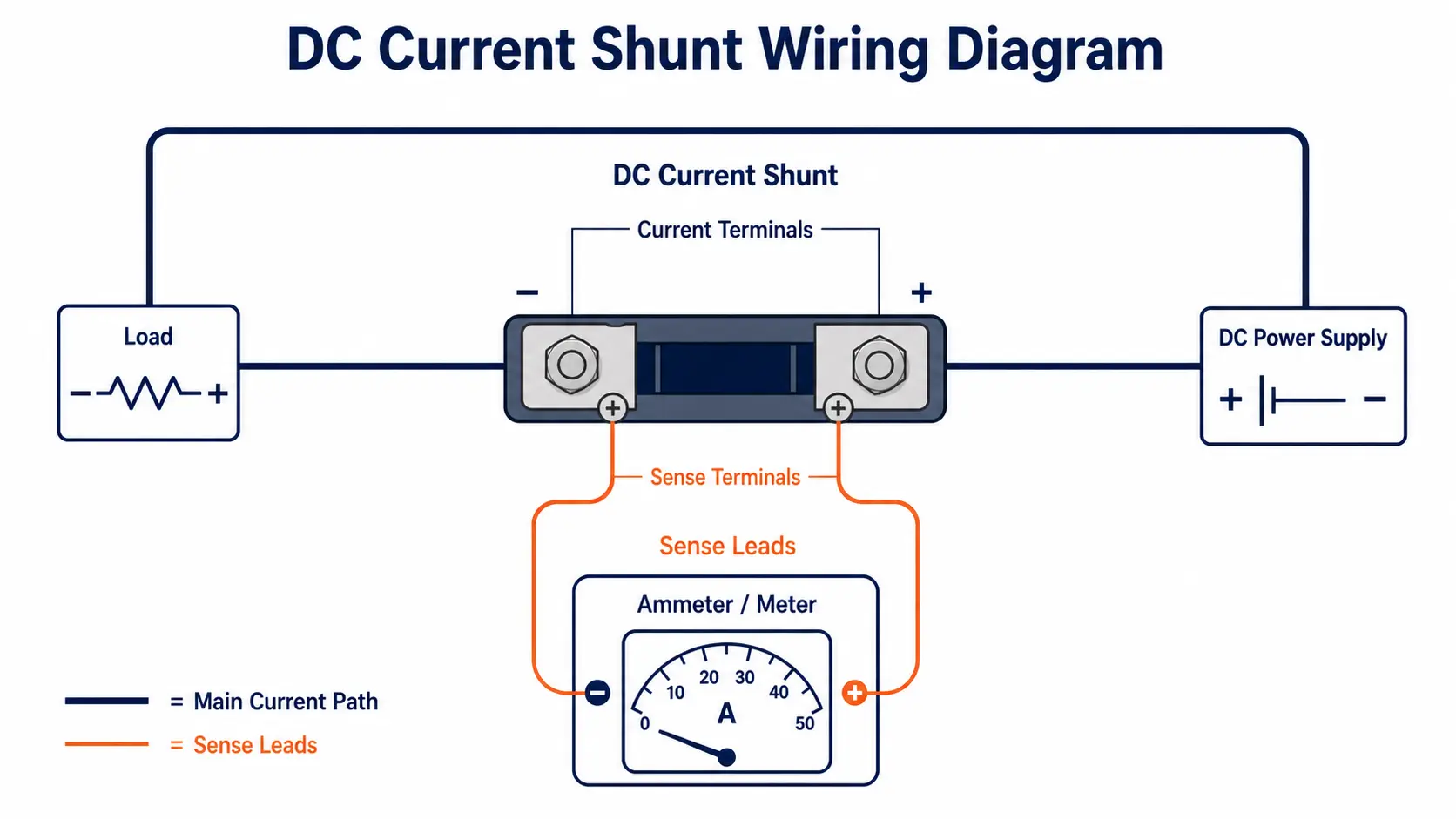
For high-current or precision applications, Kelvin sensing terminals are important because the meter should read the voltage drop across the shunt element, not the voltage loss in the main current terminals or cables.
Mounting and Wiring Considerations
A good shunt selection can still perform poorly if the installation is wrong. The shunt should be installed in series with the DC current path, while the meter or controller should connect to the dedicated sensing terminals.
General wiring principles include connecting the main current cables to the current terminals, connecting the meter to the sensing terminals, keeping sensing wires separate from high-current conductors where possible, and making sure all high-current connections are tight and properly sized.
For practical installation details, refer to LEEYD’s DC shunt wiring guide.
Standard vs Custom DC Current Shunts
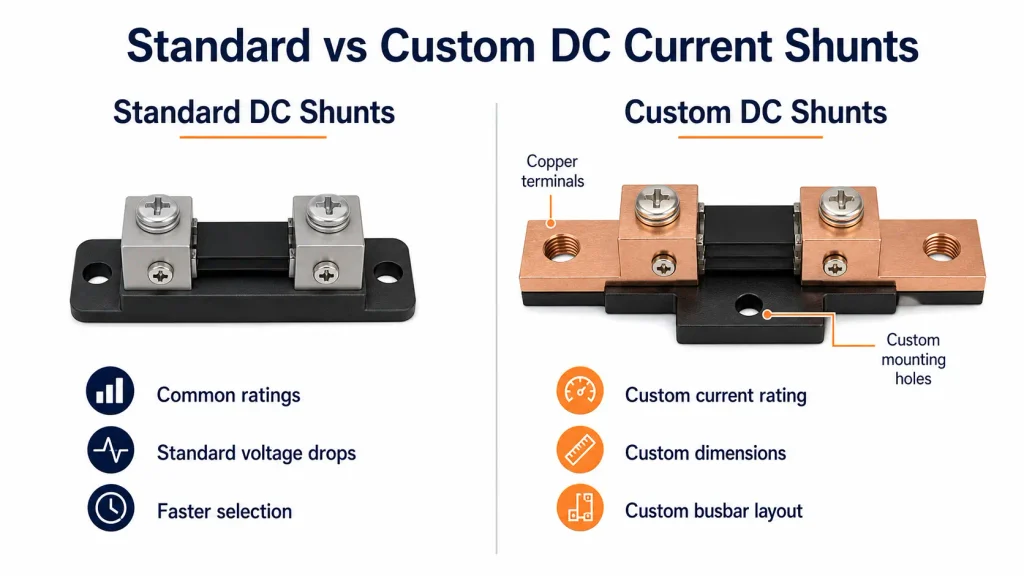
Standard DC shunts are suitable when the current rating, voltage drop, accuracy, and mounting layout match an existing model. They are often used for common ammeter, panel, battery, welding, and power supply applications.
Custom DC shunts are useful when a project requires a special current rating, voltage drop, mounting holes, busbar layout, terminal material, or mechanical structure.
For production equipment, a custom shunt can help the measurement component fit the electrical and mechanical design instead of forcing the equipment layout to adapt to a standard part. You can review LEEYD’s available custom DC shunt resistor options for standard and project-specific requirements.
Choosing a DC Shunt for Ammeter Applications
For a DC ammeter, the shunt must match the meter input. Many DC ammeters are designed for a specific full-scale millivolt input, such as 50mV or 75mV. If the shunt and meter do not match, the current reading may be incorrect.
| Ammeter Requirement | Matching Shunt Example |
|---|---|
| 100A / 75mV meter | 100A 75mV shunt |
| 300A / 50mV meter | 300A 50mV shunt |
| 500A / 75mV meter | 500A 75mV shunt |
Choosing a DC Shunt for Welding Equipment
Welding equipment often requires stable current feedback under demanding conditions. The shunt may need to handle high current, current fluctuation, heat, and vibration. For this application, confirm the welding current range, duty cycle, peak current, cooling conditions, mounting space, and signal purpose.
For related product guidance, see LEEYD’s page on DC current shunt welding applications.
Choosing a DC Shunt for Battery, EV, and Energy Storage Systems
Battery and energy storage systems use DC shunts to measure charge and discharge current. The shunt may be connected to a battery monitor, BMS-related measurement circuit, or another monitoring device.
For these applications, confirm maximum charge and discharge current, continuous current, short-time overload, measurement accuracy, thermal environment, insulation requirements, installation layout, and the meter or controller input signal.
What Information Should You Send to a DC Shunt Supplier?
To select or customize a DC current shunt, prepare the rated current, voltage drop, accuracy requirement, application, installation space, terminal material, mounting-hole layout, and any available drawing or sample.
| Requirement | Example |
|---|---|
| Rated current | 500A, 1000A, 3000A, or custom |
| Voltage drop | 50mV, 75mV, 100mV, or custom |
| Accuracy | 0.5%, 0.25%, or project-specific |
| Application | Welding equipment, battery system, switchgear, test equipment |
| Installation space | Available length, width, height, and mounting position |
| Drawing or sample | Preferred when the structure is custom |
Common Selection Mistakes
- Choosing only by current rating and ignoring voltage drop.
- Using a 50mV meter with a 75mV shunt, or the opposite.
- Ignoring overload and duty cycle.
- Installing the shunt where heat cannot dissipate.
- Using long or poorly connected sensing wires.
- Selecting a standard model when the equipment actually needs a custom layout.
- Treating DC shunt motor information as the same topic as a DC current measurement shunt.
LEEYD DC Current Shunt Options
LEEYD manufactures standard and custom DC current shunts for accurate current measurement in welding equipment, battery systems, EV and energy storage systems, switchgear, industrial power systems, and test equipment.
If you are not sure which shunt fits your application, send your current rating, voltage drop, accuracy requirement, installation space, and application details. LEEYD can help recommend a standard model or evaluate a custom design.
FAQ
What is the difference between a DC shunt and a shunt resistor?
In current measurement, a DC shunt is a type of low-resistance shunt resistor designed to measure direct current by producing a proportional millivolt output. The term DC current shunt is more specific for high-current DC measurement applications.
Is a 50mV shunt better than a 75mV shunt?
Neither is always better. A 50mV shunt usually produces less power loss, while a 75mV shunt is very common for DC ammeters and monitoring systems. The correct choice depends on the meter or controller input.
Can one DC shunt work with any ammeter?
No. The shunt must match the ammeter’s current range and millivolt input. For example, a meter designed for 500A / 75mV should be matched with a 500A 75mV shunt.
When should I choose a custom DC shunt?
Choose a custom DC shunt when the required current rating, voltage drop, mounting holes, dimensions, terminal material, or busbar layout cannot be met by a standard model.
Where should a DC current shunt be installed?
A DC current shunt is installed in series with the current path. The best physical location depends on the system design, safety requirements, available space, and how the meter or controller will read the sensing signal.
Conclusion
Choosing the right DC current shunt depends on more than the current rating. Buyers should also confirm voltage drop, accuracy, operating conditions, mounting layout, terminal design, and the meter or control system that will read the signal.
For standard applications, an existing DC shunt model may be enough. For welding equipment, battery systems, EV and energy storage systems, switchgear, or specialized industrial equipment, a custom DC shunt may provide a better mechanical and electrical fit.
If you need help selecting a DC current shunt, send LEEYD your application details, current rating, voltage drop, accuracy requirement, and installation drawing or sample. “`