
When engineers compare open loop vs closed loop Hall effect current sensors, the choice is usually not about which technology is better in every situation. It is about the current range, accuracy requirement, response speed, output signal, installation space, and cost target of the electrical system.
Open loop Hall current sensors are often selected for general isolated current measurement where compact size and cost efficiency matter. Closed loop Hall current sensors are used when the project needs higher accuracy, better linearity, faster response, and lower offset drift. For product options, see LEEYD Hall Sensors.
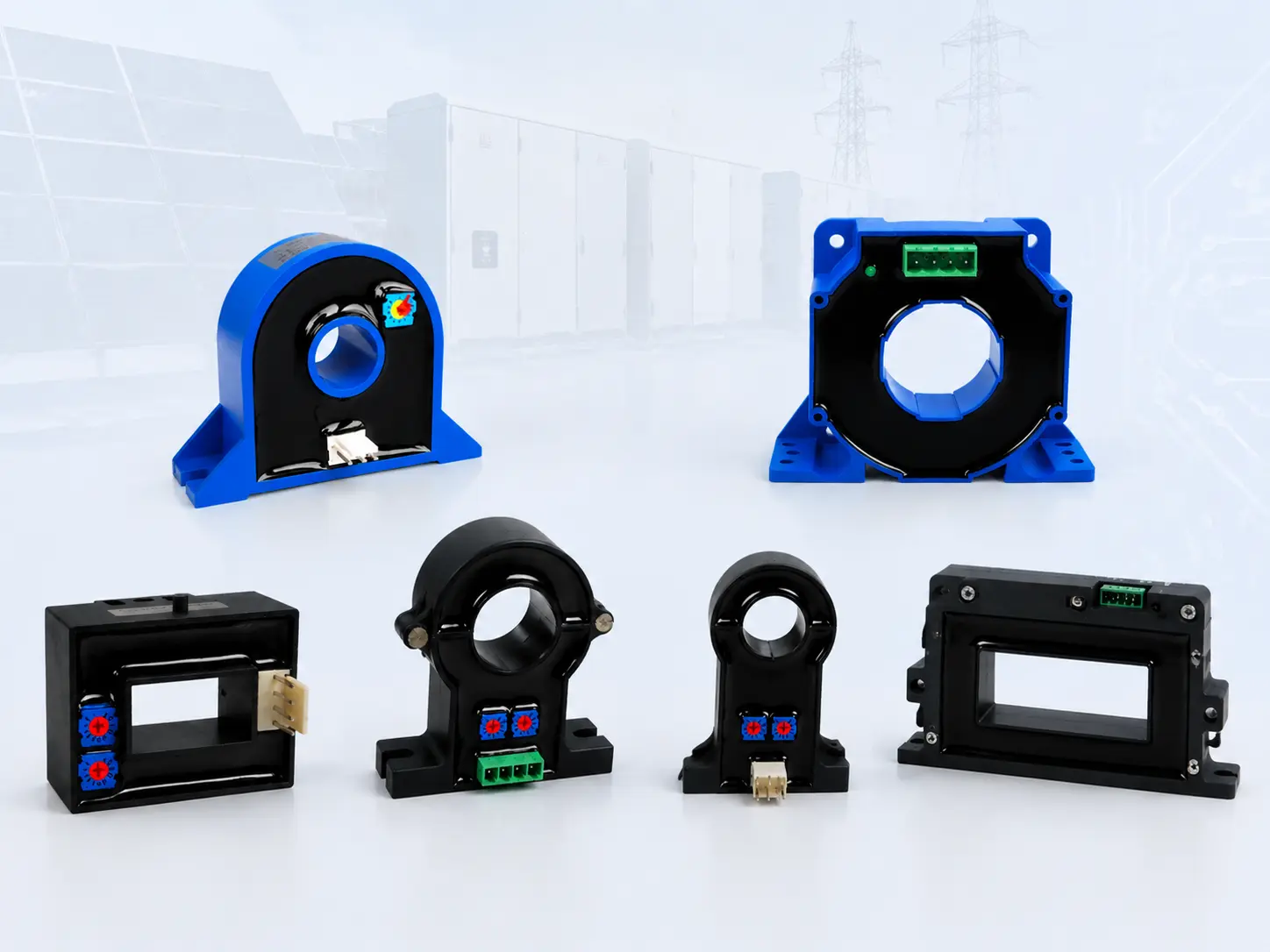
What Is a Hall Effect Current Sensor?
A Hall effect current sensor measures current by detecting the magnetic field generated around a conductor. Because the sensing element does not need to be directly connected in series with the main circuit, the sensor can provide electrical isolation between the measured current path and the control or monitoring circuit.
This makes Hall current sensors useful in industrial drives, power supplies, battery systems, welding equipment, renewable energy systems, UPS systems, test equipment, and electrical control cabinets. Depending on the design, a Hall sensor can measure DC current, AC current, pulse current, or mixed current signals.
For some high-current DC measurement projects, engineers may also compare Hall sensors with DC current shunts. A shunt measures current through a voltage drop across a precision resistor, while a Hall current sensor measures current through the magnetic field around the conductor.
What Is an Open Loop Hall Current Sensor?
An open loop Hall current sensor uses a magnetic core and Hall element to detect the magnetic field produced by the primary current. The sensor converts that magnetic field into an electrical output signal, such as voltage or current, for a meter, PLC, controller, or monitoring circuit.
The open loop design is relatively simple and efficient. It usually offers compact structure, wide current range, low power consumption, and competitive cost. It is a practical choice when the system needs isolated current detection but does not require the highest possible accuracy or fastest dynamic response.
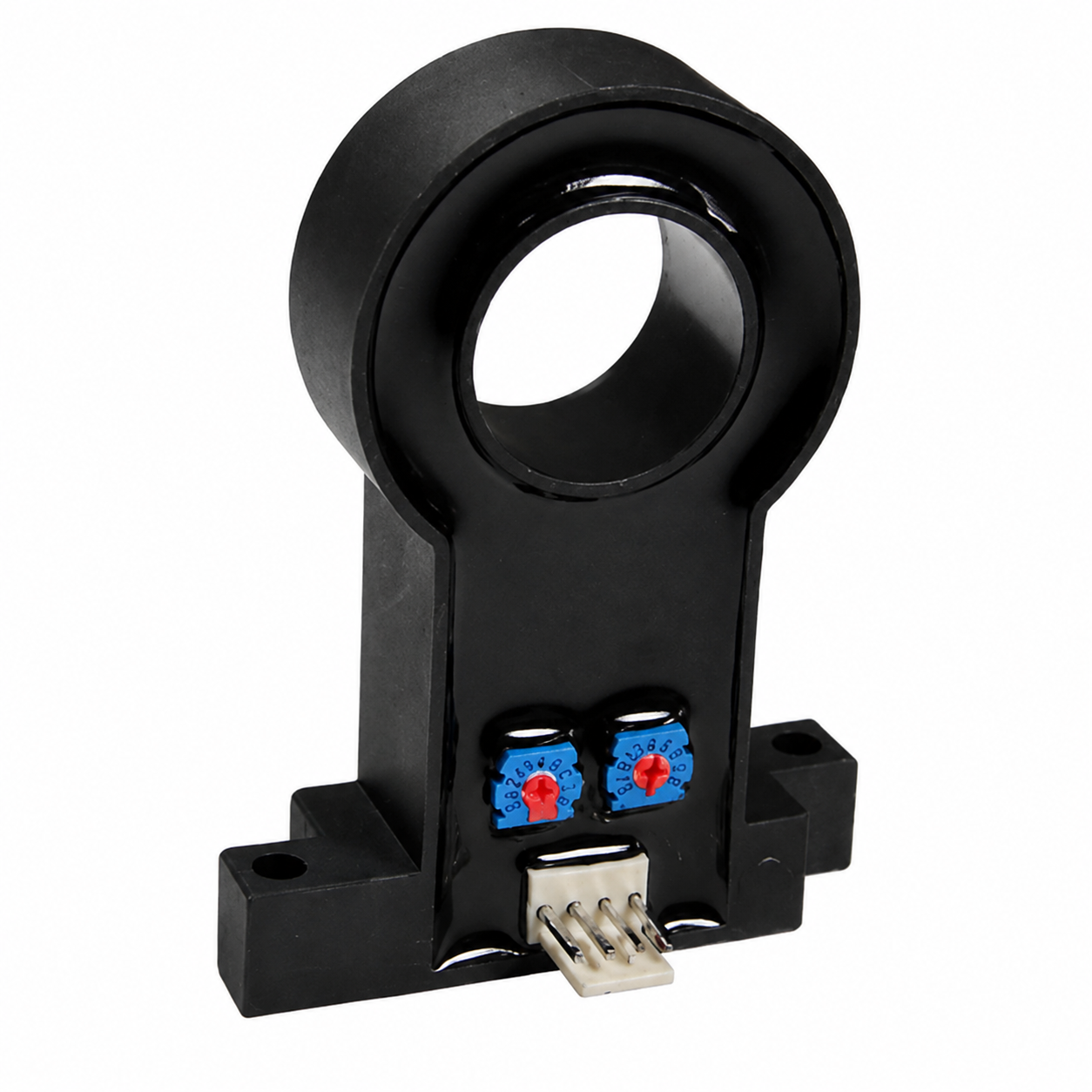
What Is a Closed Loop Hall Current Sensor?
A closed loop Hall current sensor, also called a compensated Hall current sensor, uses a feedback winding to balance the magnetic field generated by the primary current. The sensor measures the current required to cancel the magnetic flux, and that compensation current is converted into the output signal.
Because of this feedback structure, closed loop Hall current sensors usually provide higher accuracy, better linearity, lower temperature drift, faster response, and better performance for dynamic current measurement. They are often used in precision power electronics, servo drives, inverter systems, battery test equipment, and industrial control systems that need stable feedback.
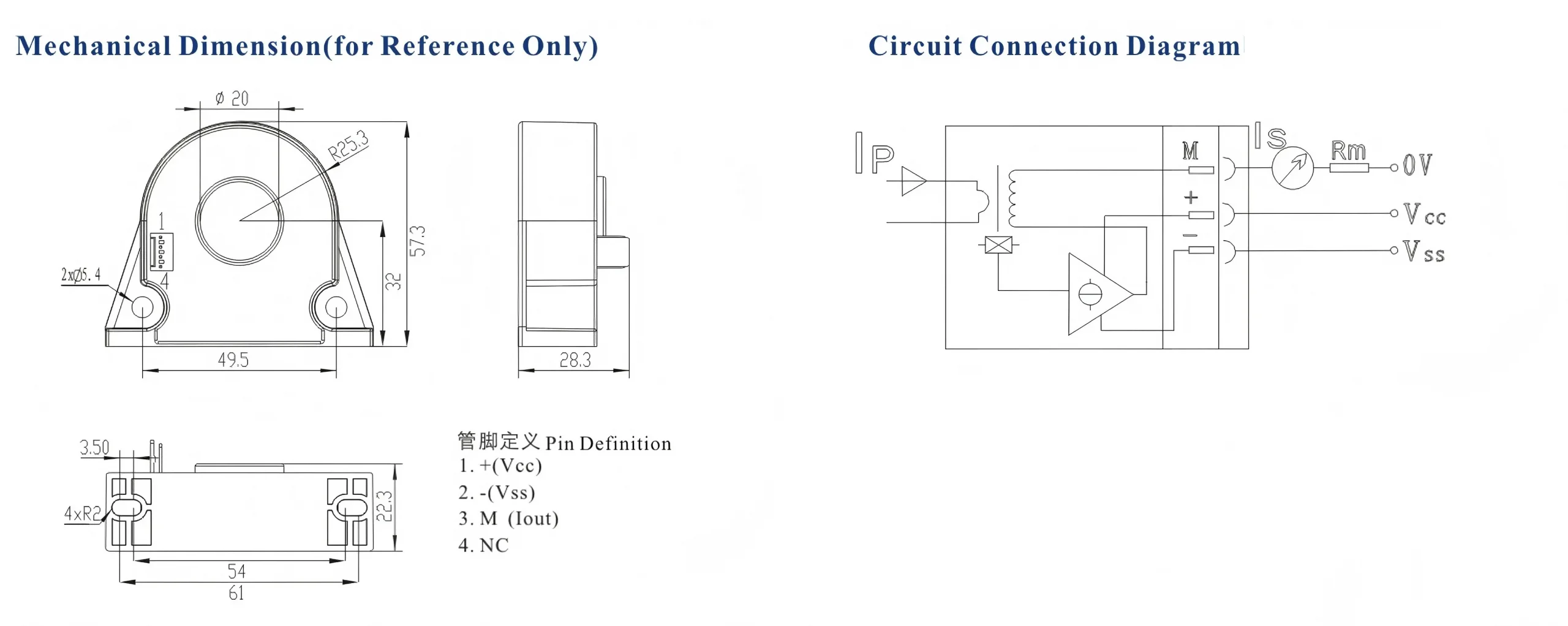
Open Loop vs Closed Loop Hall Sensors: Key Differences
The table below summarizes the practical differences that usually matter during engineering selection.
| Selection Factor | Open Loop Hall Current Sensor | Closed Loop Hall Current Sensor |
|---|---|---|
| Operating principle | Measures magnetic field directly through the Hall element | Uses feedback compensation to balance the magnetic field |
| Accuracy | Suitable for general current measurement | Better choice for higher accuracy requirements |
| Linearity | Good for many industrial applications | Typically better linearity over the measuring range |
| Response time | Suitable for standard monitoring and control | Faster response for dynamic current measurement |
| Offset and drift | More affected by temperature and offset drift | Lower drift and better long-term stability |
| Power consumption | Usually lower | Usually higher because of the compensation circuit |
| Cost | More economical | Higher cost, but better performance |
| Best fit | General isolated current measurement, monitoring, protection | Precision control, feedback systems, fast-changing current |
When to Choose Open Loop Hall Current Sensors
Choose an open loop Hall current sensor when the project needs reliable isolated current measurement with a compact structure and reasonable cost. It is often suitable for power distribution cabinets, control panels, charging systems, battery monitoring, general inverter monitoring, and current detection in industrial equipment.
- The required accuracy is moderate rather than laboratory-grade.
- The system needs a compact and cost-efficient sensor.
- The measured current is relatively stable or changes within a predictable range.
- The controller only needs current indication, monitoring, or protection feedback.
- The application needs isolation between the primary conductor and the signal circuit.
When to Choose Closed Loop Hall Current Sensors
Choose a closed loop Hall current sensor when the current signal is used for precise control, fast feedback, or high-stability measurement. This is common in servo drives, inverter control, power conversion systems, battery charge and discharge testing, UPS systems, and other equipment where current feedback affects control performance.
- The project needs higher accuracy and better linearity.
- The current changes quickly and response time matters.
- The control system needs a stable feedback signal.
- Temperature drift and zero offset must be reduced.
- The equipment works in demanding industrial or power electronics conditions.
Key Specifications to Confirm Before Selection
Before choosing between open loop and closed loop Hall effect current sensors, confirm the electrical and mechanical requirements of the project. A similar-looking sensor may have a different current range, aperture size, output signal, power supply, accuracy class, and response performance.
| Specification | What to Confirm |
|---|---|
| Measured current | DC, AC, pulse, or mixed current; rated current and peak current |
| Current range | Nominal current, overload requirement, and expected measuring range |
| Output signal | Voltage output, current output, switch output, or customized signal |
| Accuracy | Accuracy class, linearity, offset, and temperature drift requirement |
| Response time | Whether the sensor is used for monitoring, protection, or fast control feedback |
| Power supply | Single or dual supply, supply voltage, and available power in the control circuit |
| Aperture and mounting | Conductor size, busbar or cable layout, mounting holes, and installation space |
| Environment | Operating temperature, vibration, electrical noise, and insulation requirement |
Common Applications
Both open loop and closed loop Hall current sensors can be used in industrial current measurement, but the application decides the correct structure. In a simple monitoring panel, open loop may be enough. In a fast power conversion control loop, closed loop may be the safer choice.
| Application | Typical Sensor Choice | Reason |
|---|---|---|
| Industrial control cabinet | Open loop or closed loop | Depends on accuracy and feedback requirement |
| Battery system monitoring | Open loop for monitoring, closed loop for precision testing | Selection depends on signal stability and control needs |
| Inverter and drive system | Closed loop often preferred | Fast response and stable current feedback are important |
| Power supply equipment | Open loop or closed loop | Depends on current waveform and control method |
| Welding equipment | Depends on current level and signal requirement | High-current measurement may also use shunts depending on design |
| Protection and alarm circuit | Open loop or switch-type sensor | Cost-effective current detection may be enough |
Hall Current Sensor or DC Shunt?
A Hall current sensor is useful when the system needs isolated current measurement without inserting a precision resistor into the current path. It is also useful when the measured conductor passes through the sensor aperture. A DC shunt is useful when the system needs a defined millivolt output, such as 50mV, 75mV, or 100mV, and the shunt can be installed directly in series with the high-current circuit.
In practical projects, the choice depends on current level, isolation requirement, signal type, heat, available installation space, and the measuring instrument. If you are comparing both options, LEEYD can help review the application and recommend whether a Hall sensor or shunt is more suitable.
How LEEYD Supports Hall Current Sensor Selection
LEEYD supplies Hall current sensors for industrial current measurement applications, including open loop Hall current sensors, closed loop Hall current sensors, current transmitters, current switches, and related sensing products. Selection can be based on measured current, output signal, accuracy requirement, aperture size, power supply, and installation conditions.
To choose the right sensor, send the measured current type, current range, output signal, power supply, conductor size, mounting space, and application environment. You can contact LEEYD for sensor selection if you need model recommendation for an industrial project.
FAQ
What is the main difference between open loop and closed loop Hall current sensors?
An open loop Hall current sensor measures the magnetic field directly, while a closed loop Hall current sensor uses feedback compensation to improve accuracy, linearity, response speed, and stability.
Is an open loop Hall current sensor accurate enough?
Yes, for many general monitoring, indication, and protection applications, open loop accuracy is enough. For precision control or fast feedback, closed loop is usually a better choice.
Can Hall effect current sensors measure DC current?
Yes. Hall effect current sensors are commonly used for DC current measurement. Depending on the model, they may also measure AC current, pulse current, or mixed current signals.
When should I use a closed loop Hall current sensor?
Use a closed loop Hall current sensor when the system needs higher accuracy, fast response, lower offset drift, and stable feedback for control or testing equipment.
What information should I provide for Hall sensor selection?
Please provide the measured current type, rated current, peak current, output signal, power supply, accuracy requirement, aperture size, mounting method, and application environment.