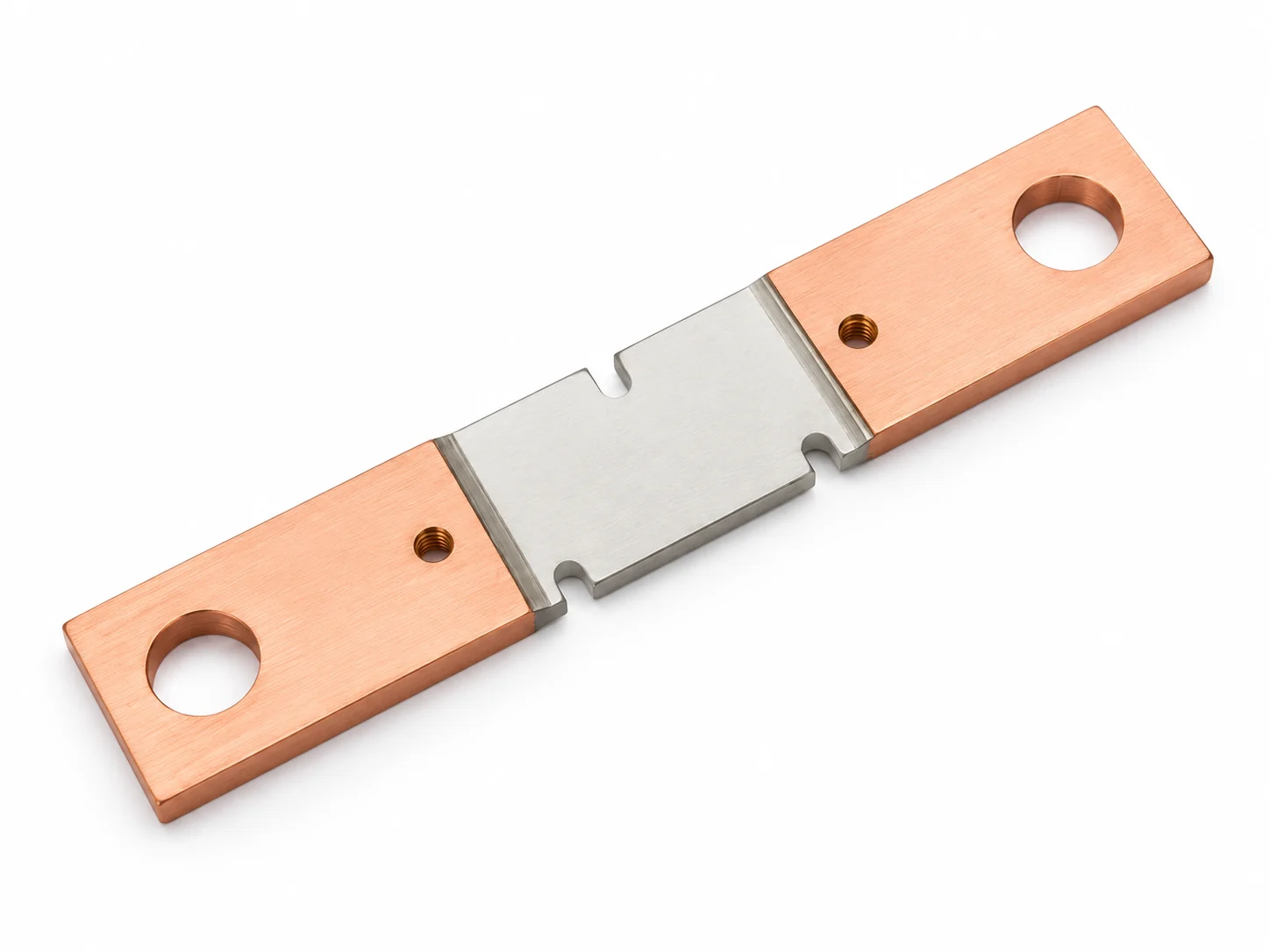
LDSH-2 High-Current EBW Shunt
Output: 100–600 A / 75 mV
Resistance: 0.125–0.75 mΩ
Tolerance: ±1%, ±5%
TCR: ±50 ppm/°C
Temperature: −40°C to +170°C
Inductance: <5 nH
For high-current industrial power systems, energy storage and DC distribution.

Low-Resistance Current Sensing
Copper-manganin current-sensing components for battery management systems, energy storage, EV power distribution and industrial power electronics.
Current rating varies by model and cooling conditions.
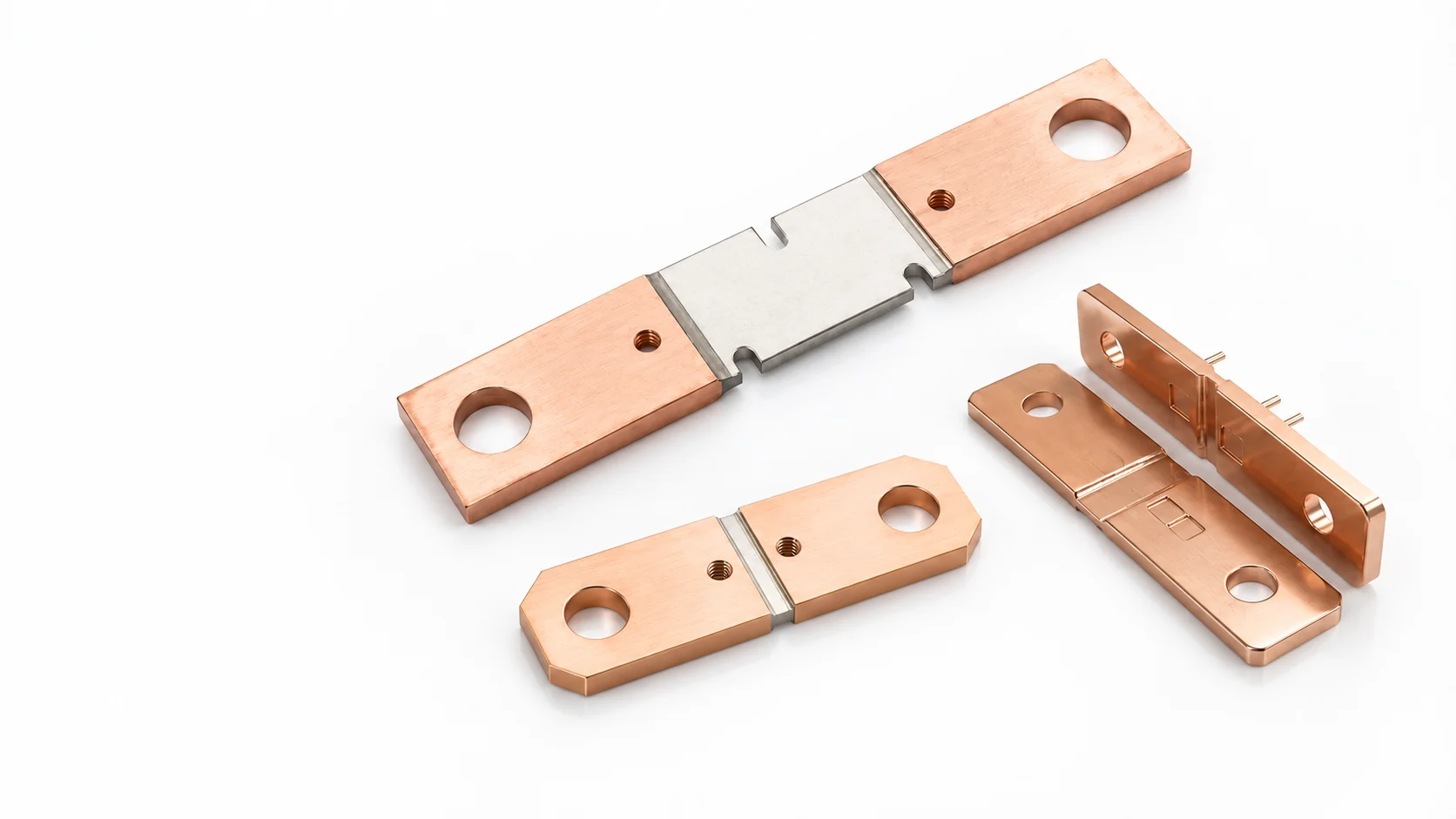
Manufacturing Process
Electron beam welding joins copper terminals to a manganin resistance element. This creates a compact copper-to-manganin joint for low-resistance current measurement.
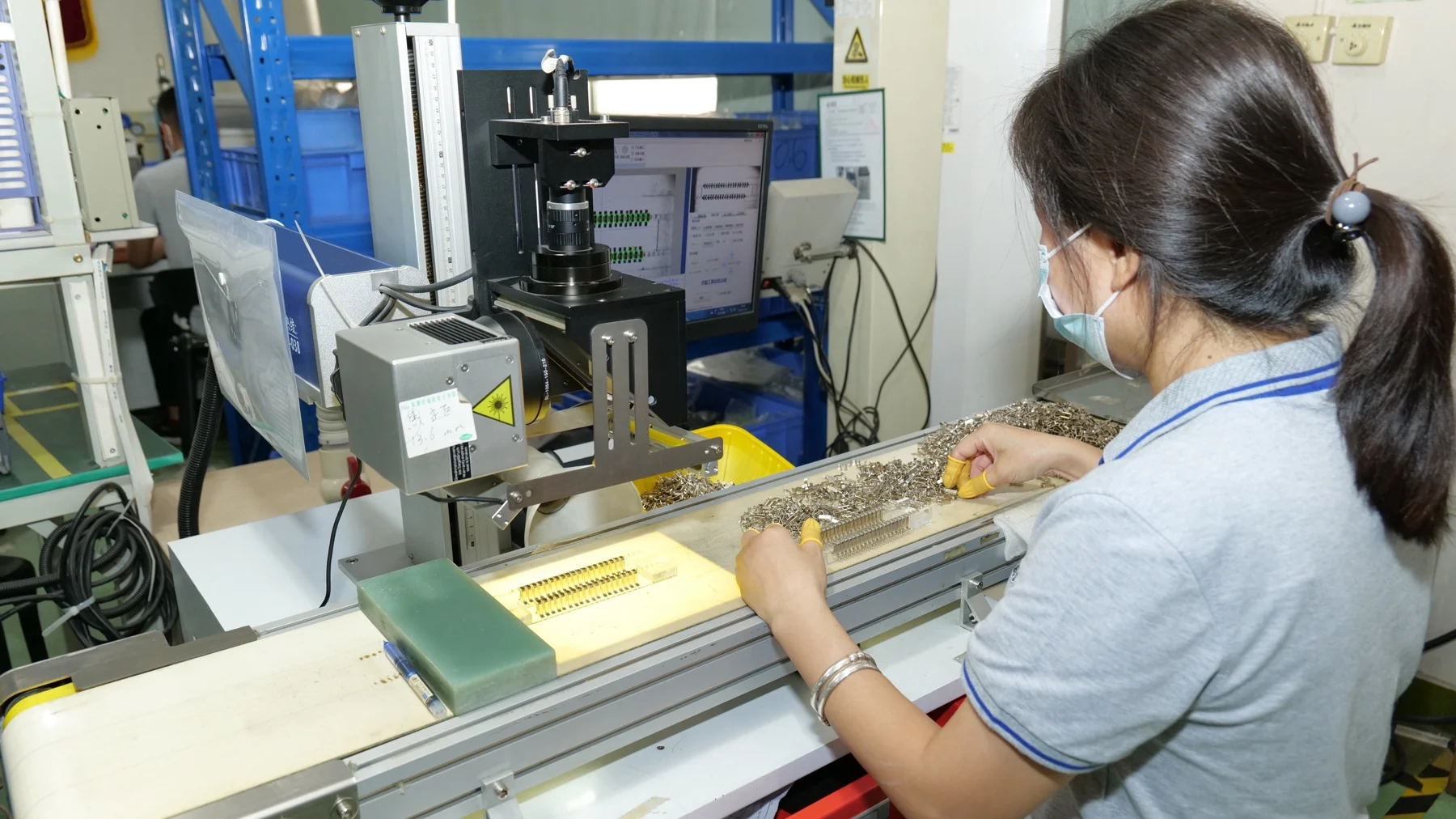
Copper terminals and manganin strips are prepared to the product drawing.
The copper and manganin sections are joined by electron beam welding.
The resistance element is trimmed to the specified value and tolerance.
Resistance and voltage output are checked against the order specification.
Product Range
Output: 100–600 A / 75 mV
Resistance: 0.125–0.75 mΩ
Tolerance: ±1%, ±5%
TCR: ±50 ppm/°C
Temperature: −40°C to +170°C
Inductance: <5 nH
For high-current industrial power systems, energy storage and DC distribution.
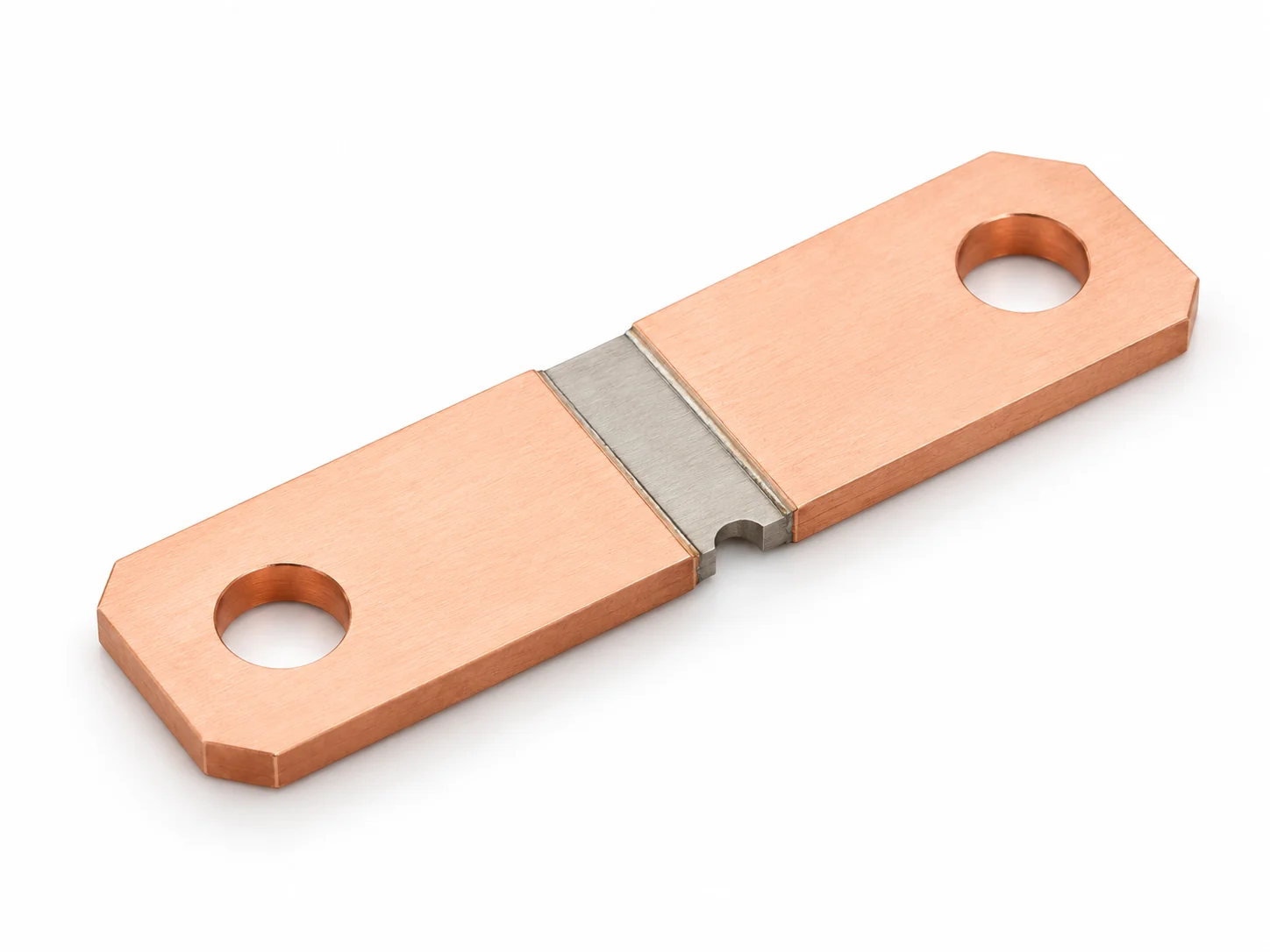
Length: 69 mm
Resistance: 50–250 µΩ
Tolerance: ±0.5%, ±1%, ±5%
TCR: ±100 ppm/°C
Temperature: −40°C to +170°C
Terminals: Through-hole, M3, pin
For compact BMS, battery packs and industrial current sensing.
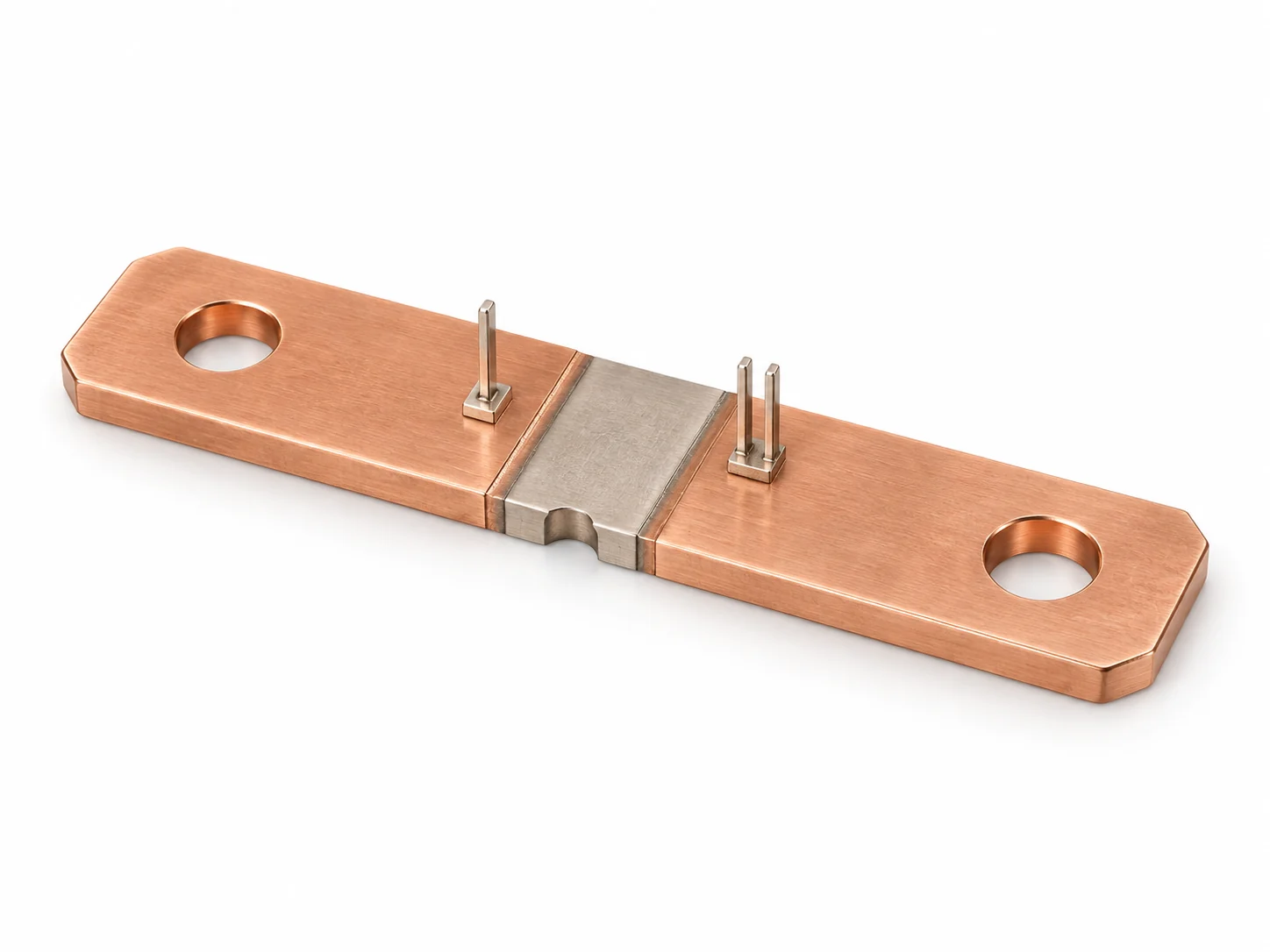
Length: 85 mm
Resistance: 50–250 µΩ
Tolerance: ±0.5%, ±1%, ±5%
TCR: ±100 ppm/°C
Temperature: −40°C to +170°C
Inductance: <3 nH
Standard, M3 threaded, pin and riveted-pin options for BMS, energy storage and power electronics.
Mechanical Integration
Check the model drawing against your busbar or PCB layout before ordering.
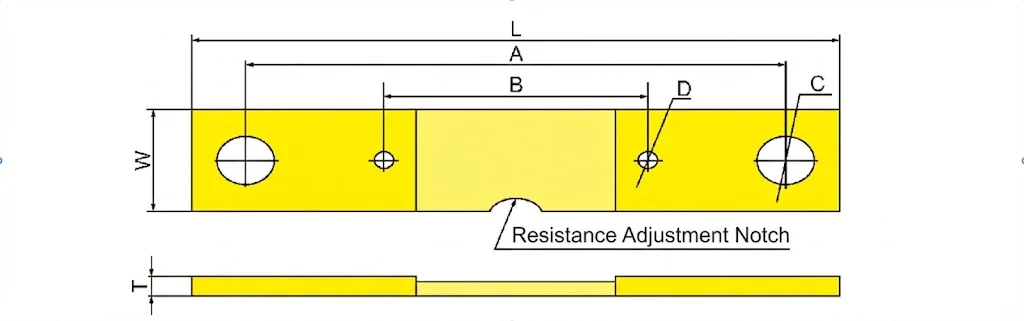
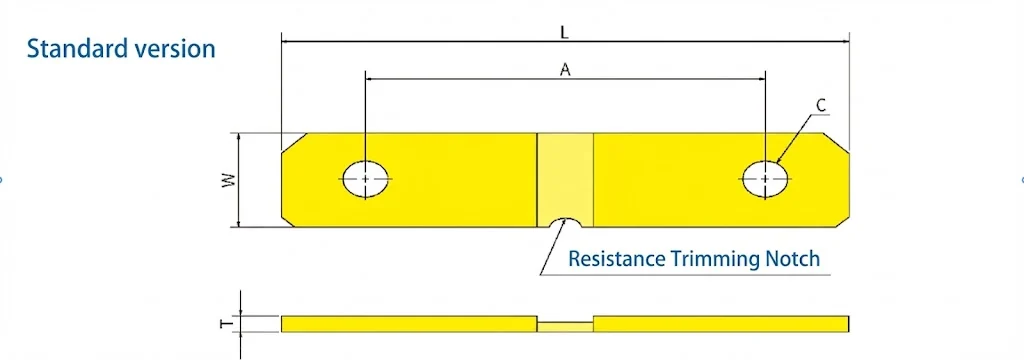
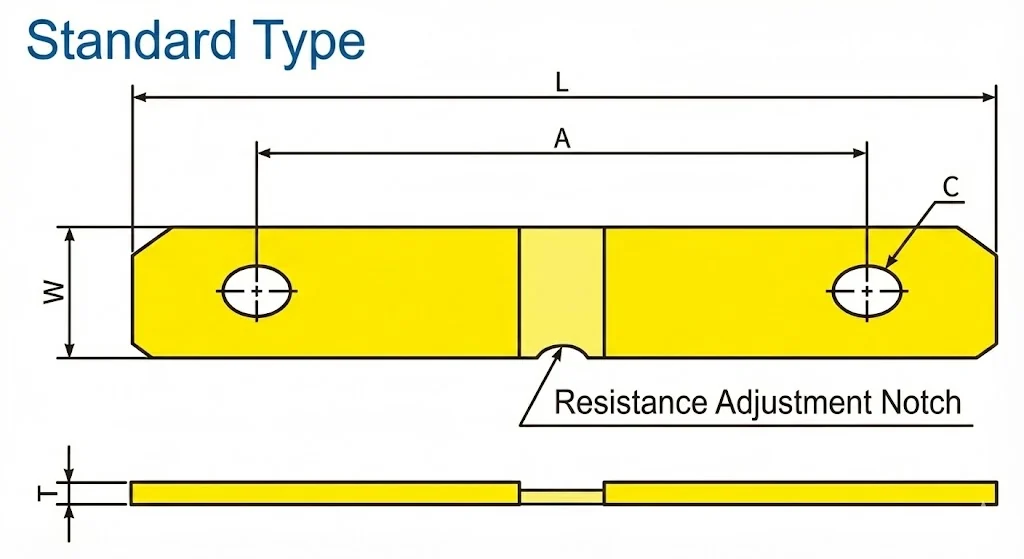
| Series / Version | Resistance or Rating | L | W | T | A | B | C | D |
|---|---|---|---|---|---|---|---|---|
| LDSH-2 | 100–600 A / 75 mV | 120 ± 2 mm | 22–44 mm* | 4 ± 0.2 mm | 100 ± 1 mm | 49 ± 1 mm | Ø10.5 ± 0.2 mm | M4 |
| LDSH-6918, M3 sense terminals | 50 / 100 / 125 / 250 µΩ | 69 ± 0.5 mm | 18 ± 0.2 mm | 3 ± 0.2 mm | 52 ± 0.2 mm | 9 / 14.5 / 16.9 / 28 mm** | Ø7 ± 0.2 mm | M3 |
| LDSH-8518, M3 sense terminals | 50 / 100 / 125 / 250 µΩ | 85 ± 0.5 mm | 18 ± 0.2 mm | 3 ± 0.2 mm | 60 ± 0.2 mm | 9 / 14.5 / 16.9 / 28 mm** | Ø7 ± 0.2 mm | M3 |
* LDSH-2 width is 22 mm for 100–300 A, 30 mm for 400 A, 36 mm for 500 A and 44 mm for 600 A.
** B corresponds to 50 / 100 / 125 / 250 µΩ respectively. The listed LDSH-6918 and LDSH-8518 values apply to the M3 sense-terminal version.
Other terminal versions use different dimensions. Request the final drawing before releasing tooling, busbars or PCBs.
Bolt-on busbar or cable integration.
M3 threaded sense terminals for voltage measurement.
Sense pins for PCB or signal-wire connection.
Riveted sense terminals for specified wire layouts.
Separate current and sense terminals reduce measurement error from connection resistance. Confirm the final drawing before ordering.
Model Comparison
| Series | Size / Configuration | Resistance / Output | Tolerance | Terminal Options | Typical Application |
|---|---|---|---|---|---|
| LDSH-2 | 120 mm bolt-on shunt | 0.125–0.75 mΩ / 100–600 A, 75 mV | ±1%, ±5% | Standard bolt-on | Industrial power, energy storage, DC distribution |
| LDSH-6918 | 69 mm body | 50–250 µΩ | ±0.5%, ±1%, ±5% | Through-hole, M3, pin | Compact BMS and battery packs |
| LDSH-8518 | 85 mm body | 50–250 µΩ | ±0.5%, ±1%, ±5% | Standard, M3, pin, riveted pin | Energy storage and power electronics |
Current rating depends on resistance, cooling, ambient temperature, duty cycle and permitted temperature rise.
Custom Engineering
Send the operating profile and drawing so electrical and mechanical requirements can be checked together.
Send Your Drawing or RequirementsApplications
Manufacturing & Test

Production includes material preparation, welding, resistance adjustment and dimensional inspection.

Checks can include resistance, voltage output, and high- and low-temperature testing for the specified model.
A high- and low-temperature test report is available for one submitted LDSH-8518 sample. It applies only to that sample.
Process Videos
EBW Manufacturing Process
Shunt Production Detail
Inspection and Testing
Technical Questions
A low-resistance current-sensing component in which copper terminals are joined to a resistance-alloy element using electron beam welding.
EBW refers to joining copper terminals directly to the manganin resistance element. Other DC shunts may use different structures or assembly methods. Choose by resistance or output, current profile, cooling and mounting.
Either can be used. For current/mV requirements, resistance follows R = V/I. Also provide continuous and peak current.
Choose according to busbar, cable or PCB integration, sensing-wire routing, mounting space and the approved drawing.
Yes. Send the target resistance, current profile, dimensions, mounting pattern and sense-terminal position for review.
Yes, products can be developed to customer specifications, but LEEYD does not claim AEC-Q200 certification for this range. Customer-specific qualification requirements and documents must be agreed for each project.
Request for Quotation
Send the application, electrical target, current profile and mechanical limits. A drawing is helpful but not required.