
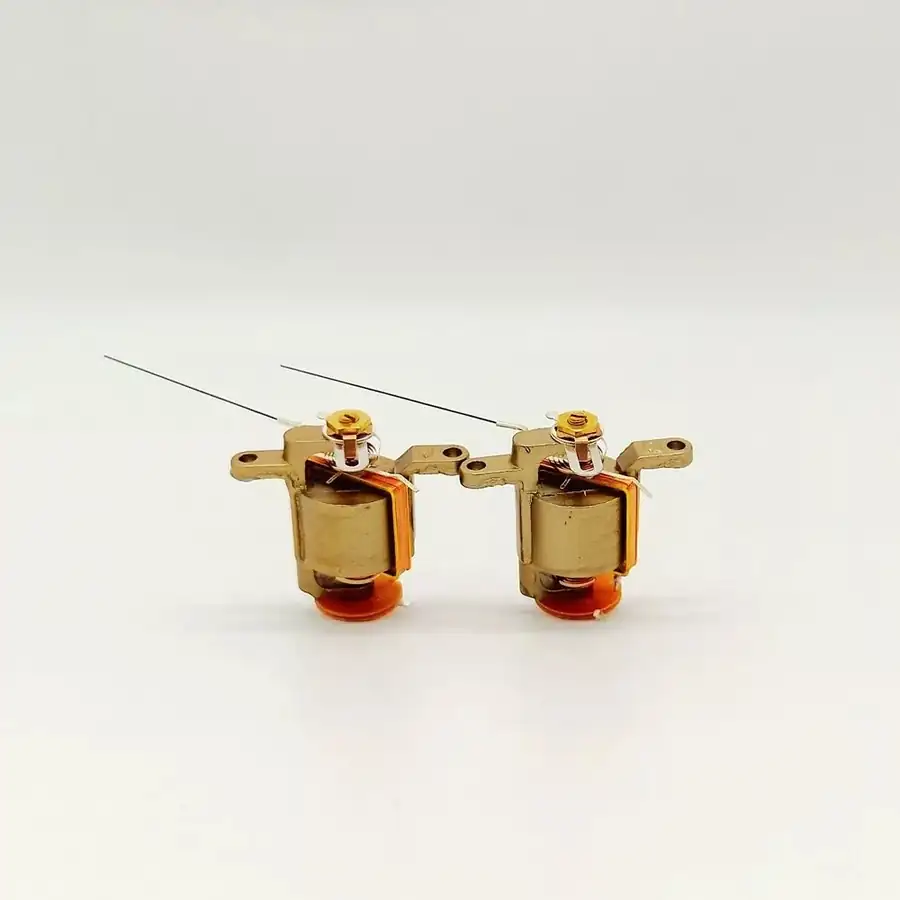
Choose an analog meter movement by matching its pointer travel, full-scale DC input current, and mounting geometry to the instrument design. Start with 85C or K-500 for a 90° dial and review K-250 for a 240° or 250° dial. Two movements with the same pointer travel still need separate electrical and mechanical checks. If the existing movement meets the instrument requirements and only one part needs replacement, match that part to a drawing or sample and check the assembled movement before approving it for use.
Start with the movement input and the dial range
When specifying a moving coil meter, record the current required to move the pointer to the full-scale mark. At the movement, this is the full-scale deflection current. Keep a separate entry for the finished instrument’s dial range and the signal that the instrument will receive. This matters when a moving-coil ammeter uses a shunt or a moving-coil voltmeter uses series resistance. An instrument drawing can state both the finished range and the current required by the movement.
For example, an 85C movement with a 5 mA full-scale input requires 5 mA through the movement at full deflection. The value printed at the end of the finished dial is set by the instrument design. When requesting a replacement, supply the original movement input and coil resistance if known, along with a dial or nameplate photo. The technical note on how a moving-coil mechanism works explains how the magnetic field, wound coil, and spring interact.
Compare 85C, K-500, and K-250 against your dial
Start with the mechanical travel shown on the dial drawing. Then compare the electrical input and mounting for each candidate. The typical current options below are starting points for a specification review.
| Specification | 85C | K-500 | K-250 |
|---|---|---|---|
| Pointer travel | 90° | 90° | 240° or 250° |
| Common full-scale DC current options | 100 µA, 200 µA, 500 µA, 1 mA, or 5 mA | Confirm the requested input for the selected configuration | 1 mA, 5 mA, or 20 mA. Confirm availability and coil resistance |
| Supply format | Bare movement for integration into the instrument | Complete movement or individual components | Bare movement with pointer. Dial and housing are separate |
| Mounting and pointer information to check | Hole locations, mounting dimensions, and pointer length | Mounting arrangement, pointer design, and required components | Mounting points, movement depth, pointer position, and selected sweep |
For a 90° design, compare the 85C and K-500 mounting drawings before selecting either model. For a long-scale dial, specify whether the pointer must travel 240° or 250°. Review the selected model with the actual dial artwork so the zero position, full-scale mark, and pointer tip line up as intended.
Compare mounting dimensions from the same reference points
Ask for a dimensioned view that identifies the pointer axis and the mounting face. On both the existing movement and the candidate drawing, compare the mounting-hole centers relative to that axis, the depth behind the mounting face, and the pointer height above the dial. Use the same viewing direction and reference points for both drawings.
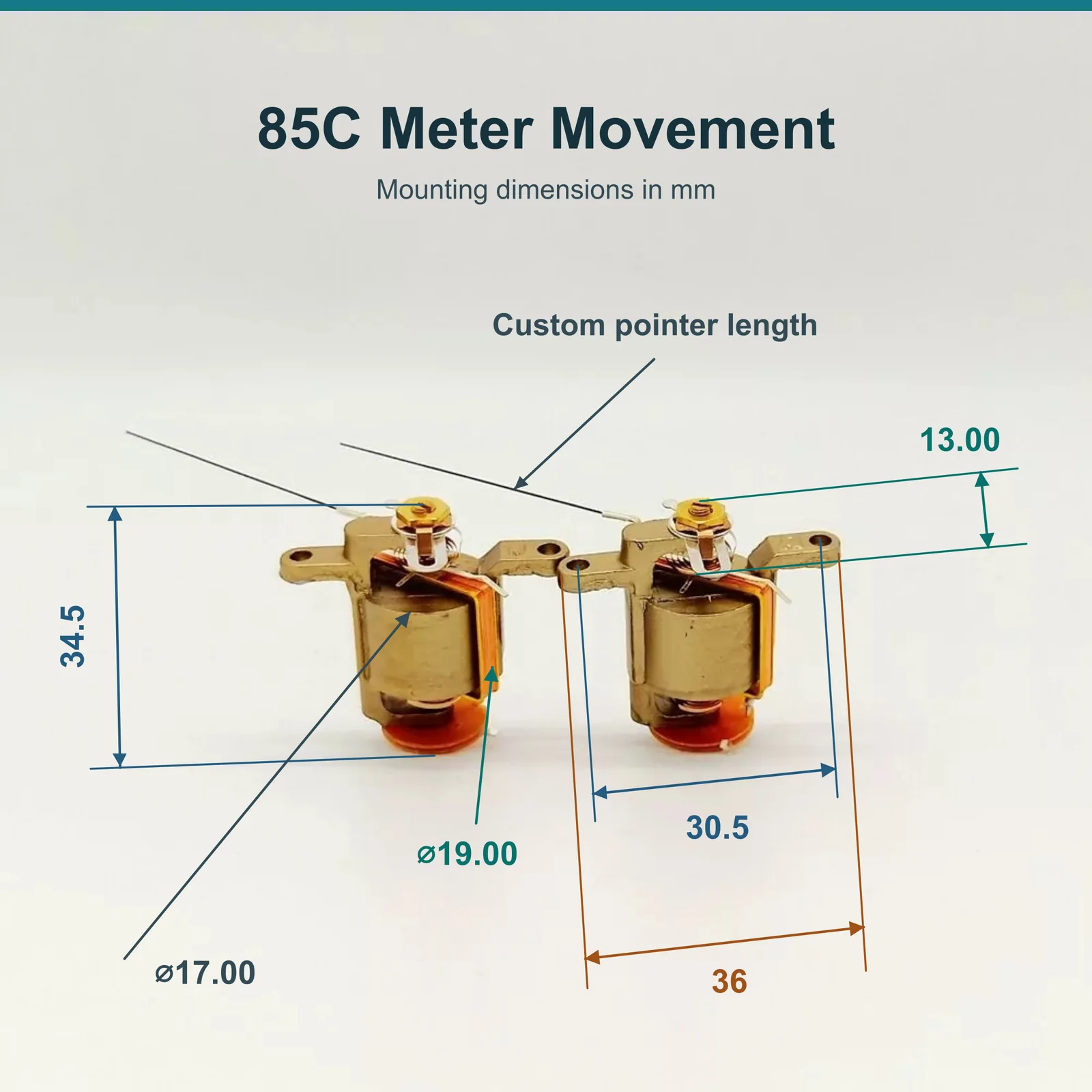
Then check clearances through the full sweep. Include the pointer length, dial opening, front window, and any nearby supports or stops that could interfere. If only a sample is available, take a front photo with the pointer at its normal zero position and a side photo showing the mounting face and pointer height. Use the photos to identify the configuration, and include measured dimensions for critical interfaces. For a sample evaluation, check that the movement fits the intended assembly and that the pointer reaches zero and full scale without interference.
Specify individual parts when you know which part needs to change
Order a complete movement when you need the mechanism as an assembly or when the existing coil, spring, and mounting combination is uncertain. If you are sourcing individual analog meter parts, start with the assembly drawing and identify the part and the components it must fit. Mark the exact part on the drawing or sample when comparing available analog meter movements and components.
- Aluminum coil former. Provide the shape, inside and outside dimensions, and any interface that must fit the existing movement. A side view helps show the frame depth as well as its outline.
- Wound moving coil. Provide the intended movement, the finished coil dimensions, and the required coil resistance. State any resistance measurement conditions specified by the drawing. Include a view that shows where the electrical connections exit the coil.
- Meter hairspring. Provide the outer and inner diameters, number of turns, required torque at a stated angle, and end shape and mounting points. Two springs with a similar outline can have different restoring torque or attachment details. Check the available ranges and how to identify a required configuration on the electrical meter hairspring page.
- Mounting bracket or magnetic assembly. Identify whether the purchase covers the bracket or the assembly. Show the mounting interfaces on the drawing. For a magnetic assembly, list the magnet material as a separate requirement. AlNiCo and ferrite are magnet options that can be reviewed against the movement design.
Send enough information to compare a quote
For a complete movement, provide the instrument application, required pointer travel, full-scale DC movement input, and a drawing or sample showing the mounting and pointer. Add the estimated quantity and identify any components that need to be included with the assembly. For a replacement, mark which dimensions must match and identify the original movement input if it is known.
For an individual part, specify the part name and the movement it goes into. Include the critical dimensions and the relevant electrical or spring requirement. For example, a wound-coil request should include resistance, while a hairspring request should include torque and its reference angle. If any required value is unknown, flag it for review and include the available sample information.
Choose the model after confirming the dial sweep, movement input, and mounting together. When retaining the existing assembly, define the replacement part and how it fits. Send your movement or component requirements to LEEYD with the available drawing or sample details and the estimated quantity.