
A Hall effect current sensor for current measurement is used when engineers need to measure DC current, AC current, pulse current, or irregular current while keeping the signal circuit isolated from the primary conductor. Compared with direct-contact measurement methods, a Hall current sensor can detect the magnetic field around the conductor and convert it into a usable electrical signal for a meter, PLC, controller, or monitoring system.
For industrial projects, the most important question is not only whether the sensor can measure current. Buyers also need to confirm the current type, current range, output signal, accuracy, response time, aperture size, power supply, and installation conditions. For available models, see LEEYD Hall Sensors.
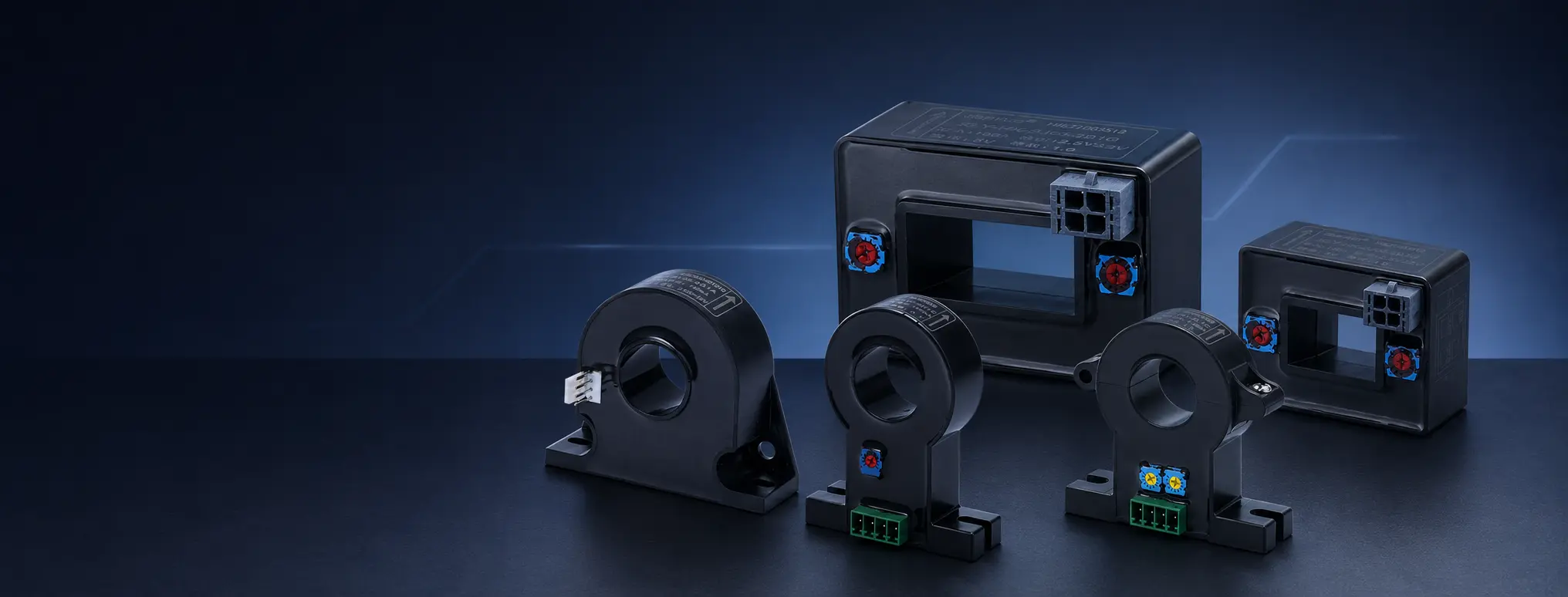
How Hall Effect Current Measurement Works
When current flows through a conductor, it produces a magnetic field around that conductor. A Hall effect current sensor detects this magnetic field and converts it into an output signal that represents the measured current. The conductor may pass through the sensor aperture, or the sensor may be built around a busbar or cable path depending on the product structure.
This measurement method allows the sensor to provide electrical isolation. The high-current path does not need to be connected directly to the low-voltage control circuit. That is why Hall current sensors are widely used in industrial control cabinets, drives, power supplies, battery systems, welding equipment, and test systems.
Can Hall Effect Current Sensors Measure DC Current?
Yes. Hall effect current sensors are commonly used for DC current measurement because the Hall element can detect the magnetic field generated by direct current. This makes Hall sensors useful in battery systems, DC power supplies, EV-related systems, solar and energy storage equipment, DC motor drives, and industrial DC control circuits.
For DC current measurement, engineers should confirm the rated current, peak current, output signal, zero offset, temperature drift, and response time. If the project needs a standard millivolt output such as 50mV, 75mV, or 100mV, a DC current shunt may also be considered.
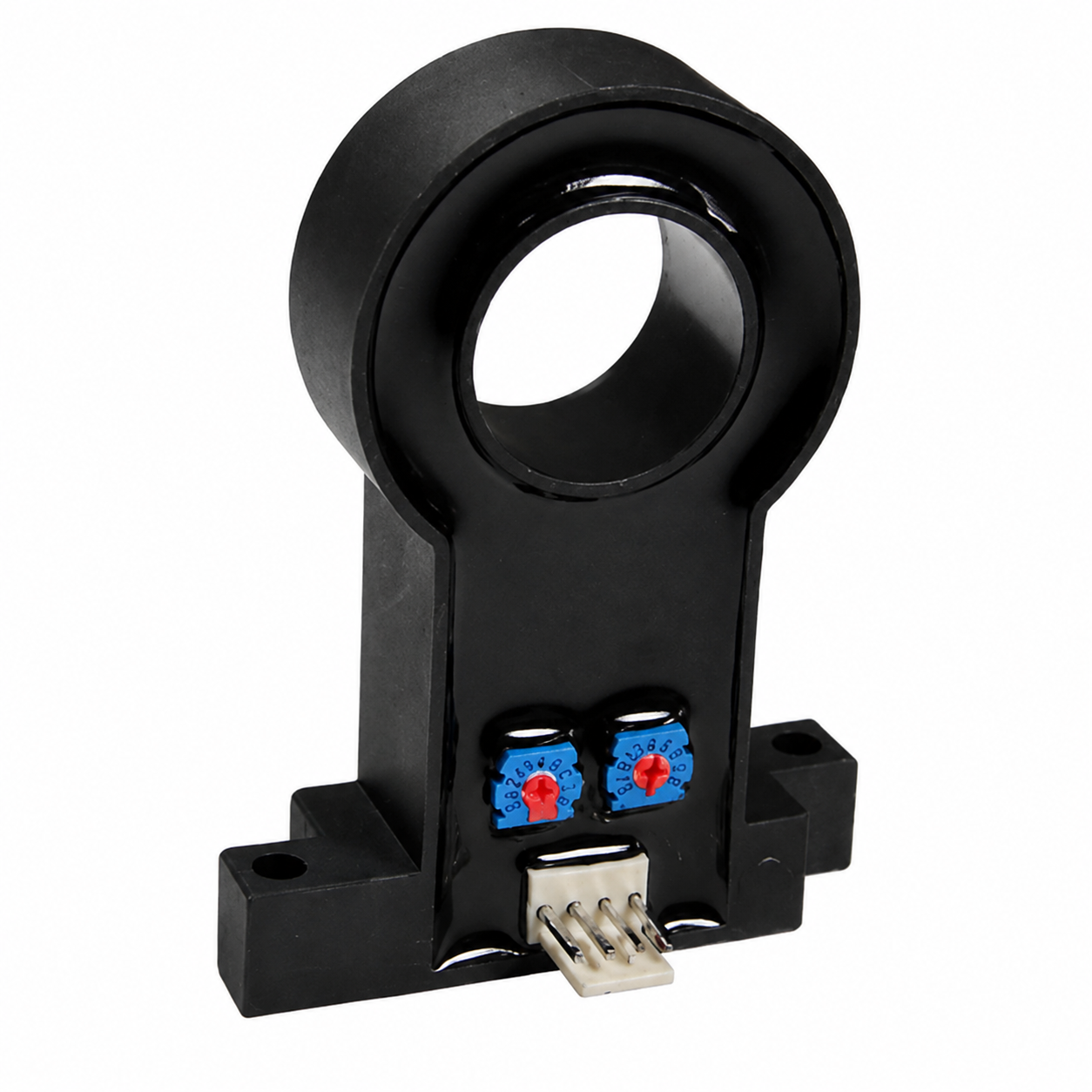
Can Hall Current Sensors Measure AC Current?
Hall current sensors can also measure AC current, depending on the model and output circuit. For AC current measurement, the sensor may provide a proportional voltage signal, current signal, or transmitter output that can be used by monitoring equipment or control systems.
When measuring AC current, buyers should confirm the frequency range, waveform, RMS or proportional output requirement, response time, and whether the receiving instrument expects AC output or DC converted output. In industrial systems, AC current sensors are often used for motor monitoring, load detection, power equipment protection, and control cabinet measurement.
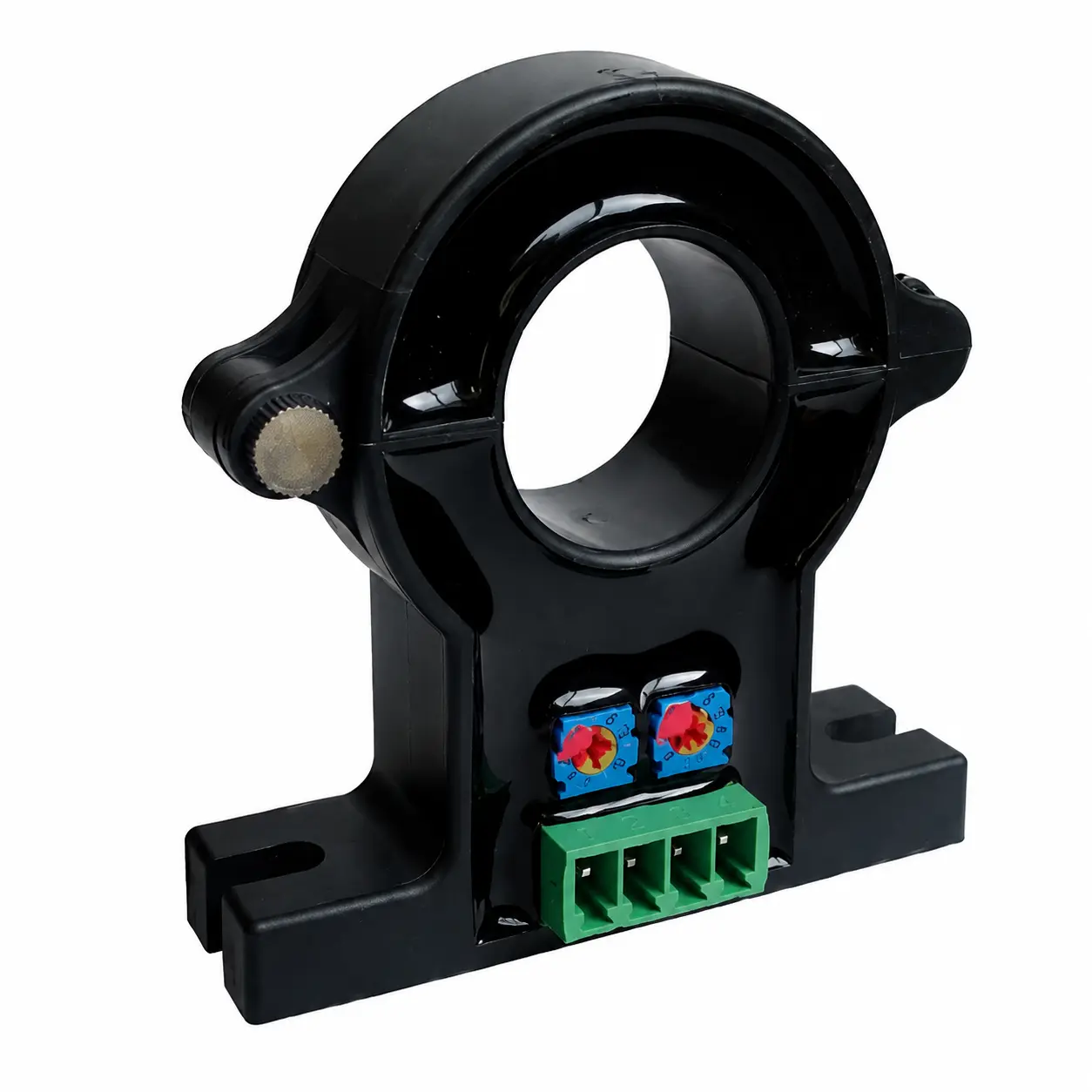
DC vs AC Hall Current Sensor Selection
The same sensor family may include models for DC, AC, pulse, or mixed current measurement, but the selection logic is different. The table below gives a practical comparison.
| Selection Item | DC Current Measurement | AC Current Measurement |
|---|---|---|
| Current type | Stable DC, bidirectional DC, pulse DC, battery charge/discharge current | Sine wave AC, load current, motor current, transformer or cabinet current |
| Key concern | Zero offset, drift, bidirectional range, response | Frequency, waveform, output type, RMS or proportional signal |
| Typical applications | Battery systems, DC drives, power supplies, energy storage, test equipment | Motors, control cabinets, AC power monitoring, current transmitters |
| Output signal | Voltage output, current output, or custom signal | AC proportional signal, DC converted signal, current output, or switch signal |
| Alternative option | DC shunt for millivolt output and high-current measurement | CT or current transmitter depending on system design |
Open Loop, Closed Loop, Transmitter, or Current Switch?
Hall current sensors are not all the same. The right product depends on the function required by the electrical system. An open loop Hall current sensor is often used for general isolated measurement. A closed loop Hall current sensor is preferred when accuracy, linearity, and response time are more important. A current transmitter converts the measured current into a standard signal. A current switch is used for threshold detection or alarm output.
| Product Type | Main Function | Typical Use |
|---|---|---|
| Open loop Hall current sensor | Isolated current measurement | General industrial monitoring and control |
| Closed loop Hall current sensor | Higher accuracy and faster response | Precision drives, power electronics, testing systems |
| Hall current transmitter | Converts current into a standard output signal | PLC, control cabinet, monitoring systems |
| Current switch sensor | Detects whether current exceeds or reaches a threshold | Protection, alarm, load detection, status monitoring |
If you are comparing open loop and closed loop structures in more detail, read the LEEYD guide: Open Loop vs Closed Loop Hall Effect Current Sensors.
Key Specifications to Confirm
Before choosing a Hall effect current sensor for DC or AC current measurement, prepare the following information. This helps avoid selecting a sensor that fits the current range but fails in output, accuracy, aperture, or installation requirements.
| Specification | Information to Confirm |
|---|---|
| Measured current | DC, AC, pulse, mixed current, rated current, and peak current |
| Direction | Unidirectional or bidirectional measurement |
| Output signal | Voltage output, current output, transmitter output, switch output, or custom signal |
| Power supply | Single supply, dual supply, supply voltage, and available control power |
| Accuracy | Accuracy class, linearity, zero offset, and temperature drift |
| Response time | Monitoring, protection, or fast control feedback requirement |
| Aperture size | Cable diameter, busbar size, and installation clearance |
| Mounting method | Panel mounting, PCB mounting, DIN rail, screw fixing, or custom structure |
| Environment | Temperature, humidity, vibration, electrical noise, and insulation requirement |
Common Application Areas
Hall current sensors are used wherever isolated current measurement or current status detection is required. The sensor may be part of a closed-loop control system, a safety protection circuit, an industrial monitoring cabinet, or an instrument panel.
- Industrial automation: current feedback for equipment monitoring and control panels.
- Power electronics: current measurement in drives, inverters, converters, and power supplies.
- Battery and energy storage: charge and discharge current monitoring.
- Welding equipment: current detection and feedback depending on system design.
- Test equipment: isolated current measurement for production or laboratory systems.
- Protection circuits: overcurrent detection, load status detection, and alarm output.
How LEEYD Helps With Model Selection
LEEYD can support Hall current sensor selection according to current type, current range, output signal, supply voltage, accuracy requirement, aperture size, mounting method, and application environment. The product range includes Hall current sensors, Hall current transmitters, current switch sensors, and high-precision current sensing products for industrial applications.
For model recommendation, provide the measured current, current waveform, output signal, power supply, conductor size, installation space, and operating environment. You can contact LEEYD for Hall current sensor selection if you need help matching a sensor to your electrical system.
FAQ
Can one Hall effect current sensor measure both DC and AC current?
Some Hall effect current sensors can measure DC, AC, pulse, and mixed current, but this depends on the model. Always confirm the current type, frequency, waveform, output signal, and accuracy requirement before selection.
What output signals are available for Hall current sensors?
Common output options include voltage output, current output, transmitter signal, switch output, and customized signals. The correct output depends on the receiving meter, PLC, controller, or monitoring system.
Is a Hall current sensor better than a DC shunt?
Neither option is always better. A Hall current sensor is useful for isolated non-contact current measurement. A DC shunt is useful when the system needs a precise millivolt output and can install the shunt in series with the current path.
What is the difference between a Hall current sensor and a current transmitter?
A Hall current sensor detects current through the magnetic field around the conductor. A current transmitter is designed to convert the measured current into a standard signal for control or monitoring equipment.
What information should I provide before ordering?
Please provide the current type, rated current, peak current, output signal, power supply, aperture size, mounting method, accuracy requirement, and application environment.