
Mechanical and digital arrester monitors are used to support surge arrester inspection, operation counting, and condition monitoring. They may look similar in a product list, but they are not selected for the same reason. A mechanical arrester monitor is usually chosen for local visual inspection, while a digital arrester monitor is used when clearer readings, alarm output, or data handling is required.
This guide explains mechanical arrester monitor vs digital arrester monitor selection for utilities, substations, industrial power systems, and projects that may later need online or intelligent arrester monitoring.
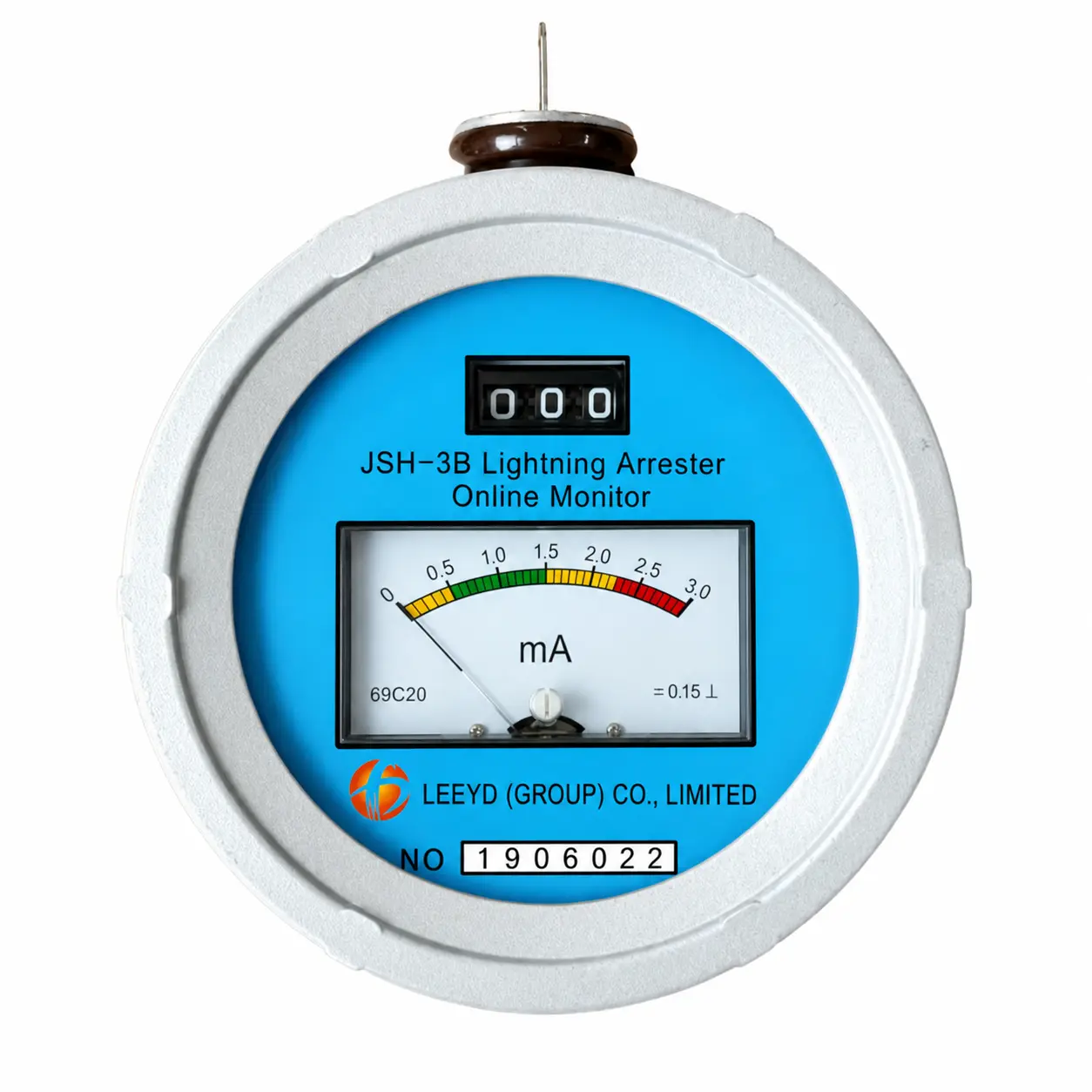
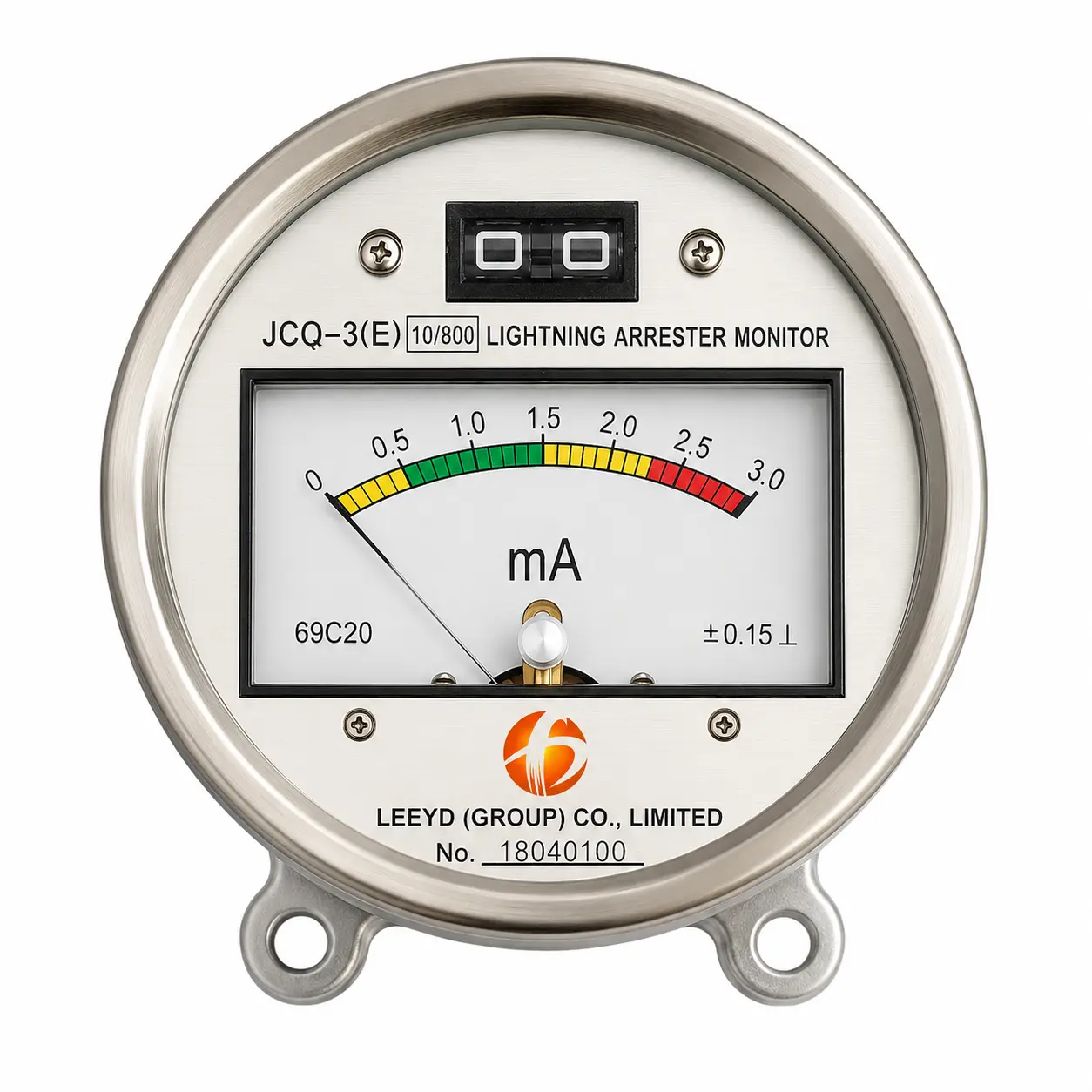
What Is a Mechanical Arrester Monitor?
A mechanical arrester monitor is a local monitoring device installed with a surge arrester. Depending on the model, it may include a mechanical operation counter, pointer indication, leakage-current indication, or a combined local display. It is typically read by maintenance personnel during routine inspection.
This type of monitor is useful when the site does not need remote communication but still requires visible information about arrester operation history and current condition. It is often selected for conventional substations, distribution systems, transformer protection, and other sites where inspection rounds are already part of the maintenance process.
What Is a Digital Arrester Monitor?
A digital arrester monitor provides a more readable electronic display or signal output for arrester monitoring data. Depending on project requirements, it may support leakage current indication, operation counting, alarm output, communication with a monitoring cabinet, or integration through a gateway.
Digital monitors are useful when the buyer needs clearer values, repeatable data reading, alarm contacts, or the possibility of collecting information from multiple arrester positions. They are also a practical step between simple local inspection and a full online arrester monitoring system.
Mechanical vs Digital Arrester Monitors: Key Differences
| Selection Factor | Mechanical Arrester Monitor | Digital Arrester Monitor |
|---|---|---|
| Main purpose | Local inspection and basic monitoring | Clearer readings, alarm output, and data handling |
| Display method | Pointer, dial, scale, or mechanical counter | Digital display or electronic signal output |
| Leakage current monitoring | May provide local indication depending on model | May provide clearer current values and alarm thresholds |
| Surge operation counting | Often available as mechanical counting | May be shown digitally or collected by a system |
| Power supply | May not require external auxiliary power for basic display | May require auxiliary power depending on functions |
| Remote monitoring | Usually limited or not available | Possible when communication or gateway options are specified |
| Best fit | Routine manual inspection | Projects needing alarms, clearer records, or system connection |
When to Choose a Mechanical Arrester Monitor
A mechanical arrester monitor is usually the right choice when the project requires simple, durable, local observation. If operators visit the site regularly and only need to record operation count or check leakage-current indication during inspection, a mechanical model may be sufficient.
- The substation has regular manual inspection rounds.
- The buyer needs local indication rather than remote data.
- The project specification does not require communication output.
- The main requirement is operation count, pointer reading, or simple leakage-current indication.
- The installation environment favors a straightforward local device.
When to Choose a Digital Arrester Monitor
A digital arrester monitor is a better fit when the site needs more than a visual mechanical reading. It can help when the project requires clearer value display, alarm functions, data output, or preparation for remote monitoring. Before ordering, confirm whether the digital monitor itself provides communication or whether a separate gateway or monitoring unit is required.
- The project needs easier reading of leakage current or operation data.
- Alarm output or threshold indication is required.
- The buyer wants to collect data from several arrester positions.
- The substation is moving toward online or intelligent monitoring.
- The specification includes communication, gateway, or station integration requirements.
Where Intelligent Arrester Monitoring Fits
An intelligent arrester monitoring system is not simply a digital display. It may include sampling units, voltage units, wireless devices, gateways, software, communication protocols, alarms, historical records, and multi-phase data collection. This level is suitable when the buyer wants centralized monitoring rather than only local readings.
If the project needs condition monitoring, remote data collection, or online inspection support, start from the full range of LEEYD arrester monitoring solutions and define which functions are actually required before choosing the device level.
How Leakage Current Monitoring Affects the Choice
Leakage-current monitoring is one of the main reasons buyers move from a simple counter to a monitor. A mechanical monitor may provide local leakage-current indication for routine inspection. A digital monitor may make the value easier to read, record, or use for alarm logic. An online system may collect leakage-current data over time for maintenance review.
For a deeper explanation of current-related monitoring requirements, review this guide to arrester leakage current monitoring.
Do You Need a Surge Counter, Monitor, or Monitoring System?
Some projects only need a surge counter. Others need a local monitor. More demanding substations may need a digital or online monitoring system. The right answer depends on what the operator must know after installation and how the data will be used.
If the buyer is still comparing basic counting and condition monitoring, it is useful to review surge counter vs arrester monitor differences before finalizing the specification.
| Project Requirement | Recommended Direction |
|---|---|
| Only count discharge operations | Surge counter |
| Count operations and read leakage current locally | Mechanical arrester monitor |
| Need clearer values or alarm output | Digital arrester monitor |
| Need remote data from several locations | Online or intelligent monitoring system |
| Need station-level integration | Digital monitoring system with defined protocol and gateway responsibility |
Application Considerations
For conventional outdoor substations, buyers often prioritize visibility, weather resistance, mounting position, and inspection convenience. For projects using zinc oxide surge arresters, the monitor should match the arrester type, voltage level, grounding method, and discharge-duty requirements.
For GIS projects, space and signal routing can be more sensitive. If the monitoring device will be used with GIS surge arresters, confirm whether the project needs local reading, remote alarm output, gateway connection, or integration with the substation automation system.
Information to Confirm Before Ordering
Before ordering a mechanical or digital arrester monitor, prepare the basic engineering information. This helps the supplier recommend a suitable model rather than guessing from a product photo.
| Item | Information to Confirm |
|---|---|
| Arrester type | Metal oxide arrester, zinc oxide arrester, GIS arrester, distribution arrester, or project-specific type |
| Voltage level | System voltage, arrester rated voltage, installation point, and grounding arrangement |
| Monitoring purpose | Operation counting, leakage-current indication, alarm output, remote data, or system integration |
| Display requirement | Pointer, mechanical digit counter, digital display, local cabinet, or software interface |
| Communication | Local only, alarm contact, RS485/Modbus, gateway, IEC 61850, or project-defined protocol |
| Installation | Indoor/outdoor use, mounting space, cable routing, reading direction, and enclosure requirement |
| Quantity | Number of phases, arrester positions, spare units, and delivery schedule |
Frequently Asked Questions
Is a digital arrester monitor always better than a mechanical one?
No. A digital monitor is useful when the project needs clearer values, alarms, or data output. A mechanical monitor may be the better choice when the requirement is simple local inspection and no communication is needed.
Can a mechanical arrester monitor measure leakage current?
Some mechanical arrester monitors provide leakage-current indication, depending on the model. Buyers should confirm current range, display type, and whether the reading matches the inspection requirement.
Does a digital arrester monitor support remote communication?
Not always. Some digital models provide local display only, while others support signal output or communication through a gateway. Confirm protocol, data points, power supply, and integration responsibility before ordering.
Which type is suitable for an unattended substation?
An unattended substation usually needs digital or online monitoring, especially if alarms and remote data collection are required. The exact configuration should be confirmed based on the station communication system and maintenance plan.
Request a Suitable Arrester Monitor
To choose between a mechanical arrester monitor, digital arrester monitor, or intelligent monitoring system, send LEEYD your arrester type, voltage level, monitoring purpose, installation conditions, communication requirement, and project quantity. The technical team can recommend a suitable device level for the application.