
A 50mV vs 75mV shunt comparison usually starts with the meter or controller input, not only the current rating. Choosing between a 50mV, 75mV, and 100mV DC shunt is not only a matter of preference. The millivolt output must match the meter, controller, battery monitor, charger, or measurement device connected to the shunt. If the output does not match the instrument setting, the current reading can be wrong even when the shunt current rating looks correct.
For buyers replacing an old shunt or specifying a new measurement system, the safest starting point is to confirm two values together: rated current and full-scale millivolt output. A 500A/50mV shunt, a 500A/75mV shunt, and a 500A/100mV shunt are three different measurement components.
LEEYD supplies standard and custom DC current shunts with common voltage drop options such as 40mV, 50mV, 60mV, 75mV, 100mV, and custom outputs for meters, battery systems, welding equipment, EV-related equipment, energy storage, switchgear, and test equipment.
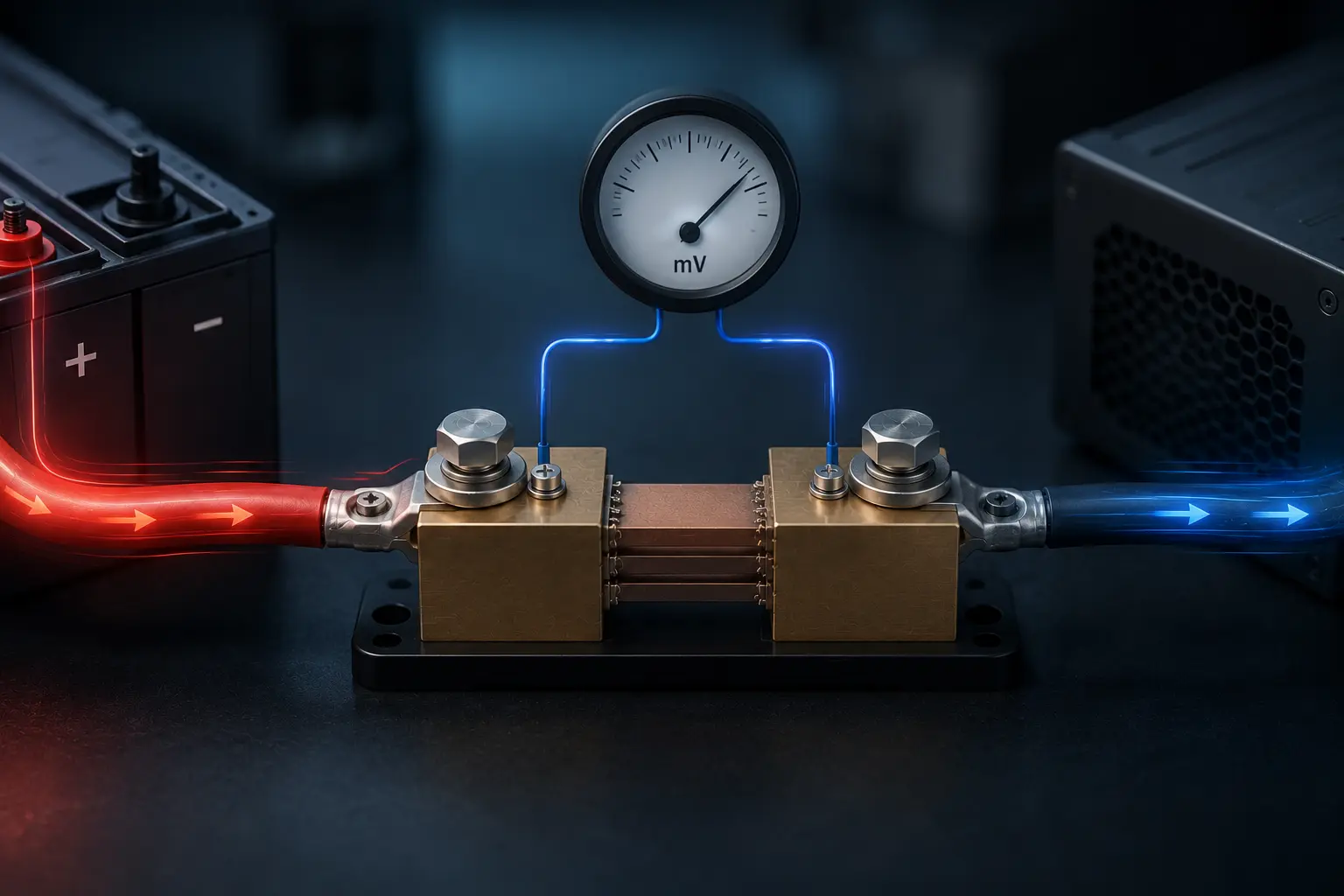
What Does 50mV, 75mV, or 100mV Mean?
The millivolt value is the full-scale voltage drop across the shunt at rated current. For example, a 500A/75mV shunt produces 75mV when 500A flows through it. A 500A/50mV shunt produces 50mV at the same rated current.
The measurement device reads this small voltage and converts it into a current value. That is why the shunt output and the meter range must be matched. If the meter expects 75mV but the installed shunt outputs 50mV, the displayed current will not represent the real circuit current correctly.
For the basic current-to-voltage principle, see how a DC current shunt works.
50mV vs 75mV Shunt Comparison: Where 100mV Fits
| Output | Typical Use | Main Advantage | Selection Note |
|---|---|---|---|
| 50mV | Battery monitors, DC panels, systems where lower voltage drop is preferred | Lower loss and lower heat than higher mV outputs at the same current | The monitor must be able to read a 50mV full-scale signal |
| 75mV | Industrial meters, panel ammeters, replacement shunts, common DC current measurement | Widely used and easy to match with many DC ammeters | Confirm whether the instrument is calibrated for 75mV |
| 100mV | Applications needing a stronger signal or specific instrument input | Higher signal level can be useful for some measurement systems | Creates more voltage drop and heat than 50mV or 75mV at the same current |
Why the Same Current Rating Is Not Enough
Many incorrect replacements happen because buyers only match the ampere rating printed on the shunt. Current rating tells you how much current the shunt is designed to carry. It does not tell you whether the connected meter will read correctly.
For example, if an old shunt is marked 1000A/75mV, replacing it with 1000A/50mV will usually cause the meter reading to be lower than expected unless the meter can be recalibrated or configured for 50mV. The reverse problem can also happen when a 100mV shunt is used in a system designed for 75mV.
If your project is a replacement job, always check the old shunt marking, meter label, wiring method, and available installation space before ordering.
Voltage Drop and Heat: What Changes?
A shunt works by creating a small voltage drop. At the same current rating, a higher millivolt output normally means a higher resistance value, which also means more power dissipation at full-scale current.
| Example Rating | Approximate Full-Scale Power Dissipation | Practical Meaning |
|---|---|---|
| 500A / 50mV | 25W | Lower heat than 75mV or 100mV at the same current |
| 500A / 75mV | 37.5W | Common industrial output with moderate heat |
| 500A / 100mV | 50W | Stronger signal, but higher thermal load |
The formula is simple: power equals current multiplied by voltage drop. In real equipment, the acceptable heat level also depends on ventilation, cabinet temperature, mounting surface, busbar contact, and duty cycle.
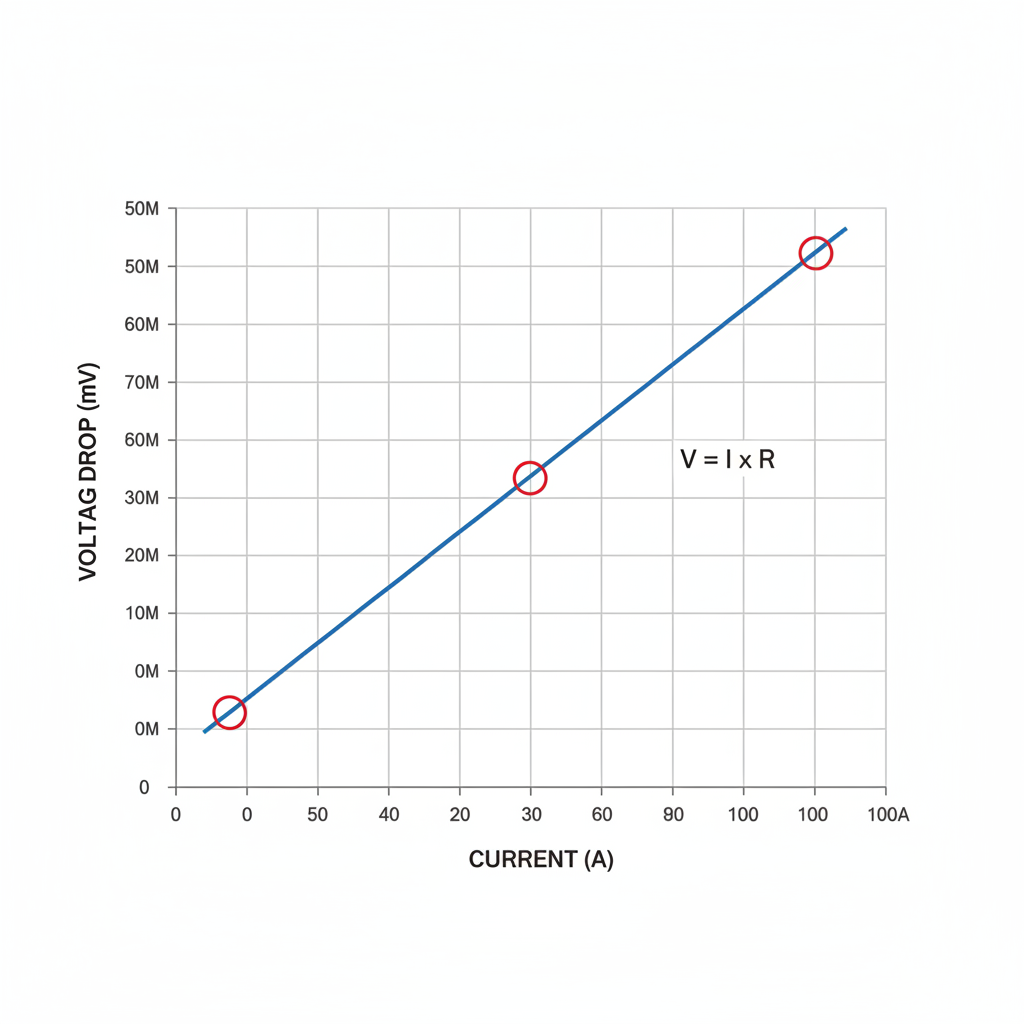
When to Choose a 50mV DC Shunt
A 50mV shunt is often selected when lower voltage drop and lower heat are important. This can be useful in battery monitoring, compact DC panels, low-loss measurement circuits, and systems where the connected monitor is designed for a 50mV input.
However, 50mV is not automatically better. The meter or controller must support a 50mV full-scale signal, and the signal wiring should be stable enough for accurate measurement. For long signal leads or noisy electrical environments, the full system design should be reviewed.
When to Choose a 75mV DC Shunt
A 75mV shunt is one of the most common choices for industrial DC ammeters and current measurement systems. It is widely used in DC panels, power equipment, welding equipment, test benches, and replacement applications.
If the existing meter is marked for 75mV, or if the project drawing specifies 75mV, stay with that output unless the instrument supplier confirms another range can be used. For more detail on this specific output, read the 75mV shunt guide.
When to Choose a 100mV DC Shunt
A 100mV shunt may be used when the measurement device requires a stronger signal or when the system specification is already designed around a 100mV input. It can be useful in some industrial monitoring, control, and testing applications.
The tradeoff is heat. At the same current, a 100mV shunt dissipates more power than a 50mV or 75mV shunt. This does not mean 100mV should be avoided, but the thermal condition and installation layout should be checked carefully.
Can You Replace a 75mV Shunt with a 50mV or 100mV Shunt?
Usually, no. A shunt should not be replaced by another millivolt output unless the connected instrument can be configured or recalibrated for that output. Mechanical fit is also not enough. The replacement must match current rating, mV output, accuracy, dimensions, mounting holes, and terminal arrangement.
If the original shunt marking is unclear, take photos of the old shunt, meter label, wiring, and cabinet installation. These details help a supplier confirm whether a standard model is suitable or whether a custom replacement is safer.
50mV vs 75mV Shunt Selection Checklist for Buyers
| Item | What to Confirm |
|---|---|
| Current rating | Full-scale current, continuous current, peak current, overload condition |
| Millivolt output | 50mV, 60mV, 75mV, 100mV, or custom output |
| Instrument input | Meter, controller, BMS, charger, or test system input range |
| Accuracy | Required accuracy class and stability requirement |
| Installation | Mounting holes, busbar direction, cable connection, available space |
| Thermal condition | Duty cycle, ventilation, cabinet temperature, heat margin |
For a complete engineering selection process, see the DC current shunt selection guide. If the application is battery-based, this article on DC shunts for battery monitoring systems may also help.
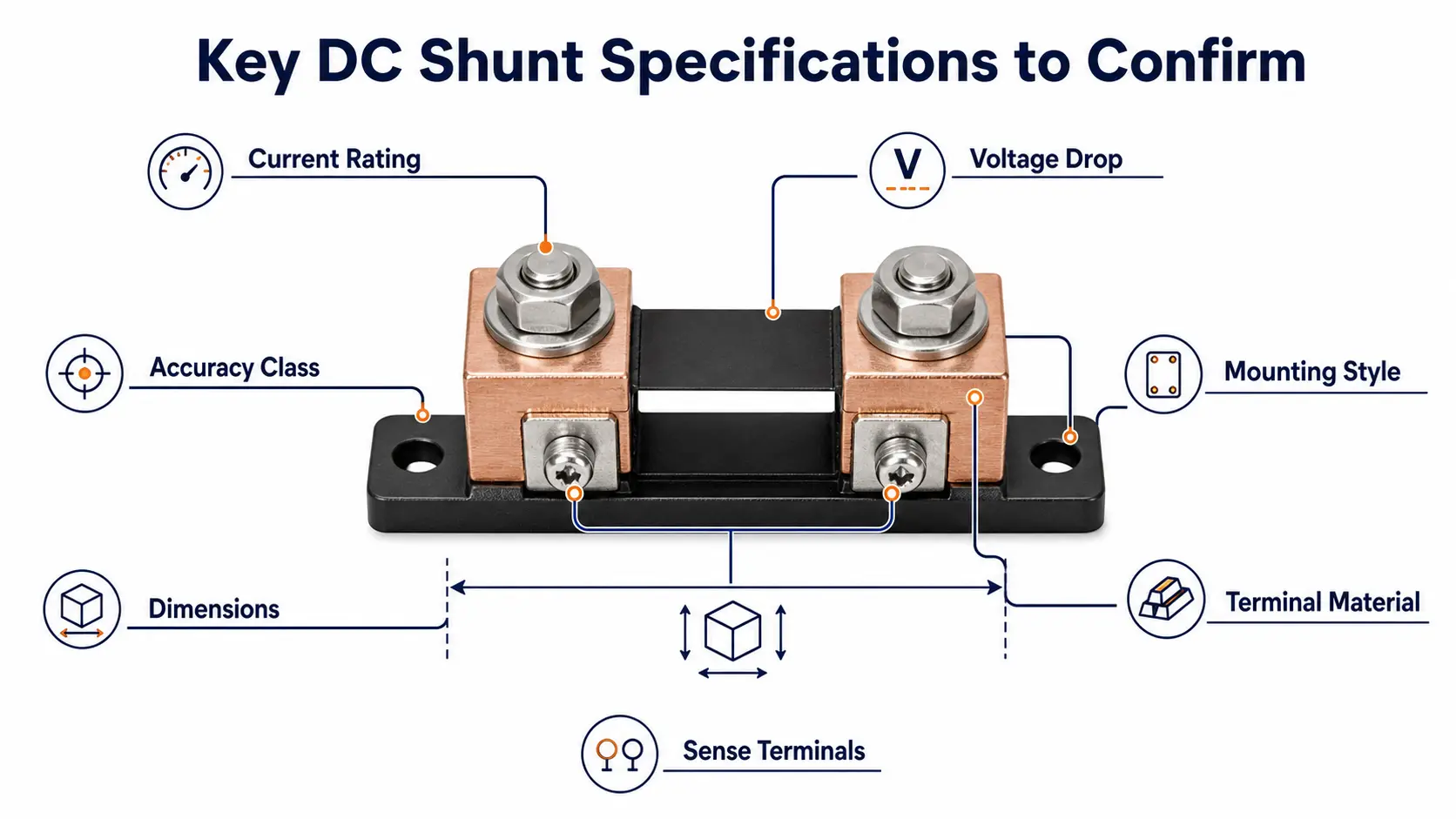
When to Request a Custom Output
A custom shunt may be needed when the project requires a non-standard mV output, special dimensions, a different terminal material, unusual mounting holes, or a busbar layout that must fit an existing cabinet. This is common in OEM equipment, retrofits, high-current DC systems, and project-specific control panels.
LEEYD can support custom DC shunt requirements by current rating, voltage drop, accuracy, dimensions, mounting holes, terminal material, and busbar layout. For quotation preparation, use the custom DC shunt RFQ checklist.
FAQ
Is a 75mV shunt better than a 50mV shunt?
Not always. A 75mV shunt gives a higher full-scale signal, while a 50mV shunt has lower voltage drop and lower heat at the same current. The correct choice depends on the connected instrument and system requirements.
What happens if I use the wrong mV shunt?
The meter or controller can display an incorrect current value. The shunt may still carry current, but the measurement signal will not match the instrument calibration.
Does a 100mV shunt get hotter than a 50mV shunt?
At the same current rating, a 100mV shunt dissipates more power than a 50mV shunt, so thermal design should be checked more carefully.
Can LEEYD make a custom mV output shunt?
Yes. LEEYD can review current rating, voltage drop, accuracy, dimensions, terminal material, mounting holes, and busbar layout to support standard or custom DC shunt requirements.
Request Help Choosing the Right DC Shunt Output
If you are not sure whether your system needs 50mV, 75mV, 100mV, or another output, send LEEYD the current rating, instrument input, application, drawing, and installation dimensions. The team can help check whether a standard DC shunt is suitable or whether a custom design is required.