
When engineers need to measure DC current or high-current signals, two common options are a DC shunt and a Hall effect current sensor. Both can be used for current measurement, but they work in different ways and fit different electrical systems. The right choice depends on current range, isolation requirement, output signal, accuracy, heat, response time, installation space, and cost.
This guide compares DC shunt vs Hall effect current sensor from a practical selection point of view. It is written for engineers and buyers working with industrial control cabinets, battery systems, welding equipment, power supplies, EV systems, energy storage, test equipment, and power electronics.
What Is a DC Shunt?
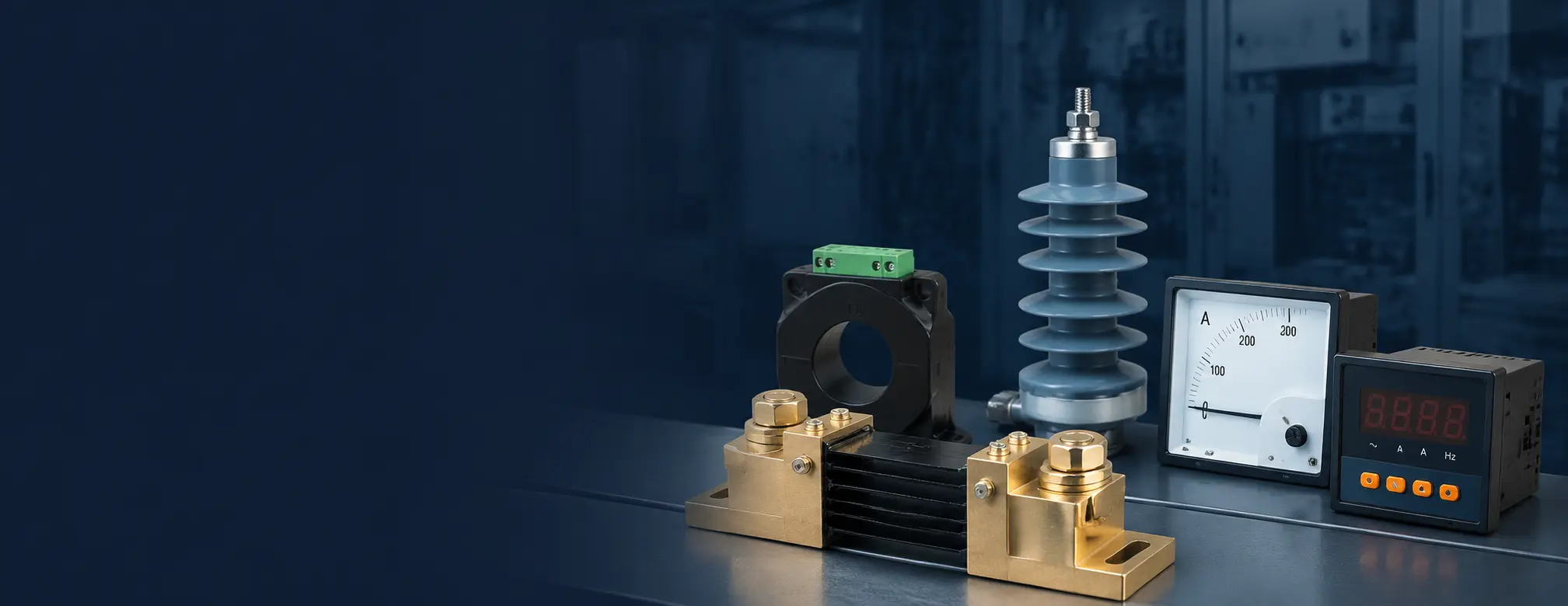
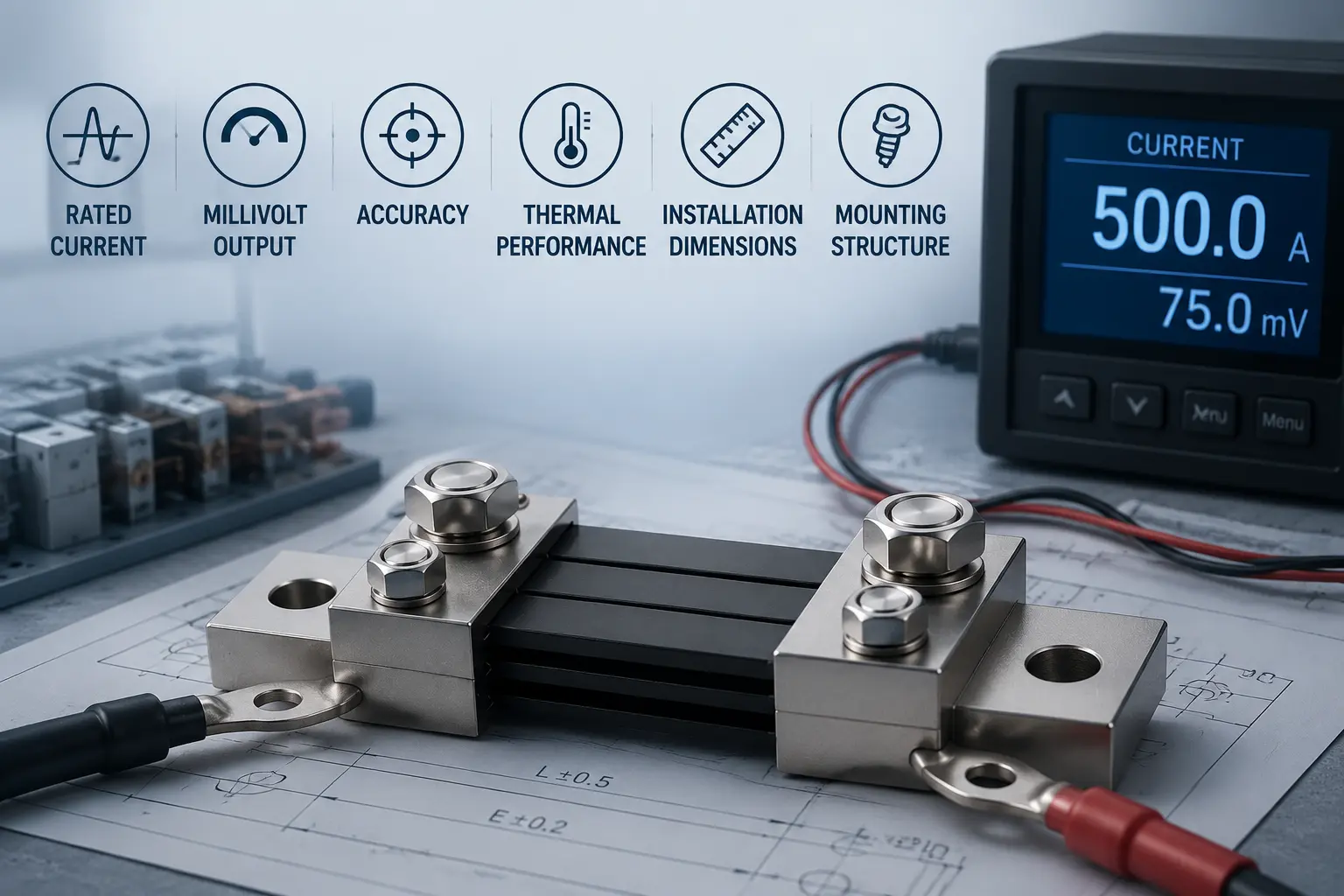
A DC shunt is a precision low-resistance component installed in series with the main current path. When current flows through the shunt, it creates a small voltage drop that is proportional to the current. This output is often specified as 40mV, 50mV, 60mV, 75mV, 100mV, or a custom millivolt signal.
DC shunts are commonly used with ammeters, battery monitors, welding equipment, switchgear, energy storage systems, EV-related systems, and industrial test equipment. For product options, see LEEYD DC current shunts.
What Is a Hall Effect Current Sensor?
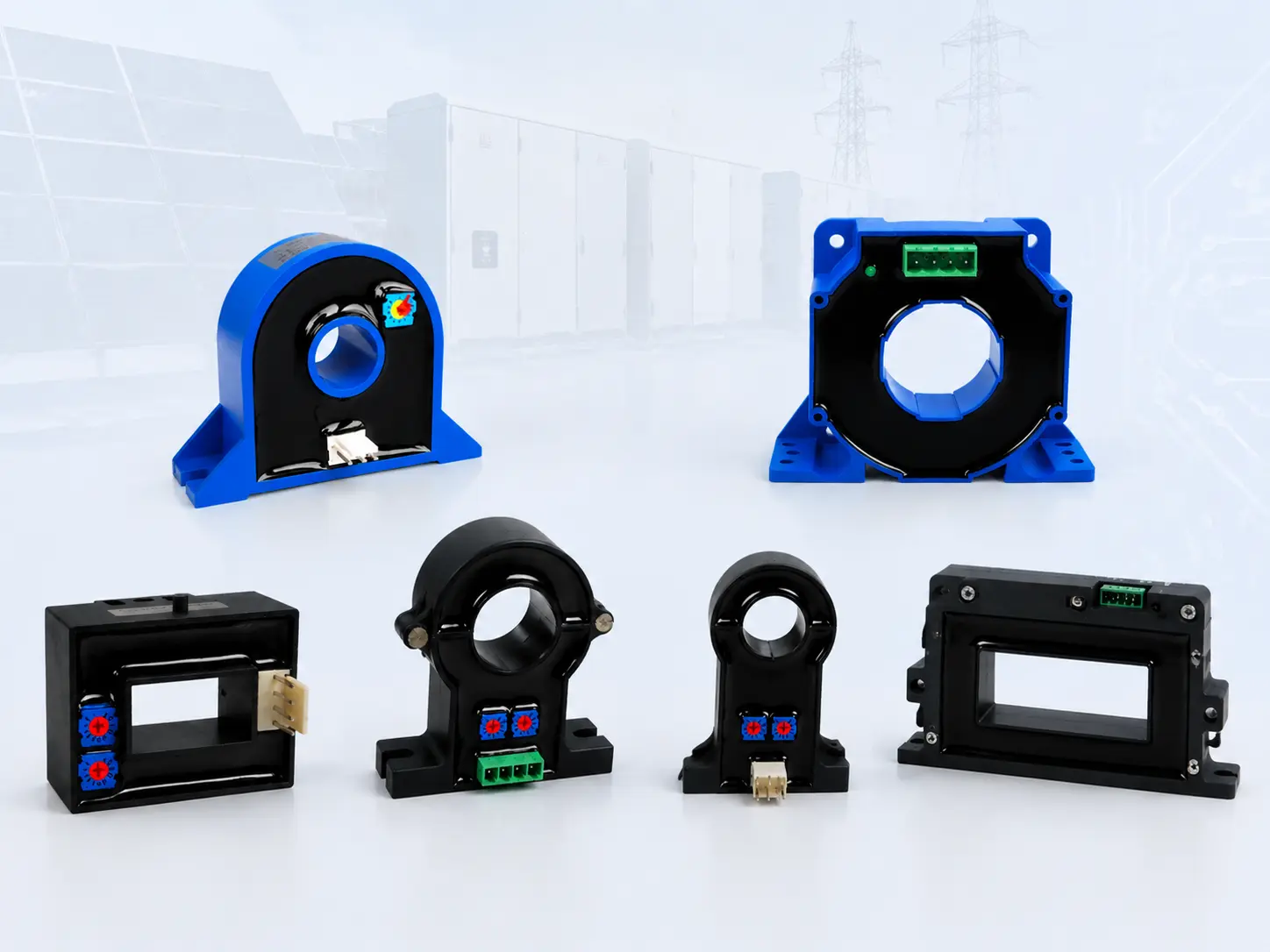
A Hall effect current sensor measures current by detecting the magnetic field around a conductor. The conductor can pass through the sensor aperture, while the output circuit remains isolated from the main current path. Depending on the model, Hall sensors can measure DC current, AC current, pulse current, or mixed current signals.
Hall current sensors are used in industrial automation, drives, inverters, battery systems, power supplies, current transmitters, current switches, and control cabinets. For available models, see LEEYD Hall Sensors.
DC Shunt vs Hall Effect Current Sensor: Main Differences
The table below summarizes the practical differences that matter during selection.
| Selection Factor | DC Shunt | Hall Effect Current Sensor |
|---|---|---|
| Measurement principle | Measures current through a precise voltage drop across a low-resistance element | Measures the magnetic field generated by current flowing through a conductor |
| Installation | Installed in series with the current path | Conductor passes through or near the sensor aperture |
| Isolation | Not inherently isolated unless the measuring circuit is isolated | Provides electrical isolation between primary conductor and signal circuit |
| Output signal | Millivolt output such as 50mV, 75mV, or 100mV | Voltage output, current output, transmitter signal, or switch output |
| Heat | Generates heat because current passes through the resistance element | Lower insertion loss because it does not rely on series resistance |
| Accuracy | High accuracy possible with correct rating, wiring, and thermal design | Depends on sensor type; closed loop models usually improve accuracy and drift |
| Best fit | High-current DC measurement, ammeters, battery monitors, welding equipment, test systems | Isolated current measurement, power electronics, drives, control systems, DC/AC current sensing |
When to Choose a DC Shunt
Choose a DC shunt when the system needs a defined millivolt output and the shunt can be installed directly in the main current path. This is common in high-current DC measurement, battery monitoring, welding equipment, panel ammeters, switchgear, and test equipment.
- The measuring instrument expects a 50mV, 75mV, 100mV, or custom shunt signal.
- The project needs a robust high-current measurement component.
- The installation can manage heat rise and current terminal connections.
- The system uses separate sensing leads for accurate millivolt measurement.
- The buyer needs a standard or custom busbar-style current shunt.
For wiring details, read DC Shunt Wiring Diagram. For output selection, see the guide to 50mV vs 75mV vs 100mV DC Shunt.
When to Choose a Hall Effect Current Sensor
Choose a Hall effect current sensor when the system needs isolated current measurement or when the primary conductor should not be interrupted by a series resistor. Hall sensors are also useful when the system needs voltage output, current output, transmitter output, or switch output for a PLC, controller, alarm circuit, or monitoring system.
- The control circuit needs electrical isolation from the measured conductor.
- The project measures DC, AC, pulse, or mixed current signals.
- The conductor passes through a sensor aperture or cabinet opening.
- The receiving device needs voltage output, current output, transmitter output, or switch output.
- The application involves drives, inverters, power supplies, industrial controls, or battery systems.
For Hall sensor selection details, read How to Select a Hall Current Sensor. If the receiving device requires a specific signal, see Hall Current Sensor Output Signals.
Accuracy, Heat, and Signal Stability
Both technologies can support accurate current measurement, but the practical error sources are different. A DC shunt depends on resistance tolerance, temperature rise, terminal connection quality, and sensing wire layout. A Hall current sensor depends on sensor accuracy, offset, temperature drift, linearity, response time, and magnetic environment.
| Issue | DC Shunt Consideration | Hall Sensor Consideration |
|---|---|---|
| Heat | Current flows through the shunt and creates heat | Lower insertion loss, but electronics still need temperature consideration |
| Wiring error | Use separate sensing leads and correct polarity | Confirm output wiring, supply, and signal reference |
| Isolation | Requires careful measuring circuit design if isolation is needed | Isolation is one of the main advantages |
| Dynamic response | Usually stable for current indication and monitoring | Closed loop Hall sensors are better for fast feedback applications |
| Signal type | Millivolt signal to a compatible meter or monitor | Voltage, current, transmitter, or switch output |
Application Examples
The application often decides the correct measurement method. The examples below show how engineers typically compare the two options.
| Application | Often Suitable Option | Reason |
|---|---|---|
| Battery monitor with shunt input | DC shunt | The monitor expects a defined millivolt signal |
| Industrial drive current feedback | Hall current sensor | Isolation and fast signal response may be required |
| Welding current measurement | DC shunt or Hall sensor | Depends on current level, waveform, noise, and meter interface |
| PLC current monitoring | Hall current transmitter | The PLC may require a standard analog signal |
| High-current test equipment | DC shunt or closed loop Hall sensor | Selection depends on accuracy, heat, isolation, and response |
| Overcurrent alarm | Hall current switch | Switch output can simplify threshold detection |
Selection Checklist Before Ordering
Before deciding between a DC shunt and a Hall effect current sensor, prepare the following information. This allows the supplier to recommend a model that matches both the electrical system and the measuring device.
| Selection Item | Information to Confirm |
|---|---|
| Current type | DC, AC, pulse, mixed current, rated current, and peak current |
| Required output | Millivolt signal, voltage output, current output, transmitter signal, or switch output |
| Isolation requirement | Whether the signal circuit must be isolated from the primary conductor |
| Accuracy and response | Measurement accuracy, linearity, drift, and response time |
| Thermal condition | Allowed heat rise, duty cycle, overload condition, and ventilation |
| Mechanical layout | Busbar, cable, aperture size, mounting holes, terminal layout, and cabinet space |
| Receiving device | Ammeter, battery monitor, PLC, controller, relay, or data acquisition system |
| Project details | Application, quantity, drawings, standards, and customization needs |
How LEEYD Helps With Current Measurement Selection
LEEYD supplies both DC current shunts and Hall current sensors for industrial current measurement applications. DC shunts are available in standard and custom structures for high-current measurement. Hall sensor products are available for isolated current measurement, current transmission, current switching, and industrial control applications.
To choose the right solution, send the current type, rated current, peak current, output signal, isolation requirement, measuring instrument, mounting space, and application environment. You can contact LEEYD for current measurement selection if you need help comparing shunt and Hall sensor options.
FAQ
Is a Hall effect current sensor better than a DC shunt?
Not always. A Hall effect current sensor is better when isolation and non-contact sensing are important. A DC shunt is better when the system needs a defined millivolt signal and can install the shunt in series with the current path.
When should I use a DC shunt?
Use a DC shunt when the meter or battery monitor expects a 50mV, 75mV, 100mV, or custom millivolt signal, and the system can support series installation and heat management.
When should I use a Hall current sensor?
Use a Hall current sensor when the system needs isolated current measurement, DC or AC current sensing, transmitter output, switch output, or signal feedback for a PLC or controller.
Can both technologies measure high current?
Yes. Both DC shunts and Hall current sensors can be used in high-current applications, but the correct choice depends on current range, heat, isolation, accuracy, response time, and mechanical installation.
What information should I provide for selection?
Please provide current type, rated current, peak current, output signal, isolation requirement, measuring instrument, installation space, and application environment.