
Choosing a Hall current sensor is not only a matter of matching the rated current. For industrial current measurement, engineers also need to confirm the current type, input range, output signal, accuracy, response time, aperture size, power supply, insulation requirement, and installation method. A sensor that looks suitable by current rating may still fail if the output signal or mounting structure does not match the system.
This Hall current sensor selection guide explains the key points buyers should confirm before ordering. It is written for industrial control cabinets, power electronics, battery systems, welding equipment, power supplies, and test equipment. For available sensor families, see LEEYD Hall Sensors.
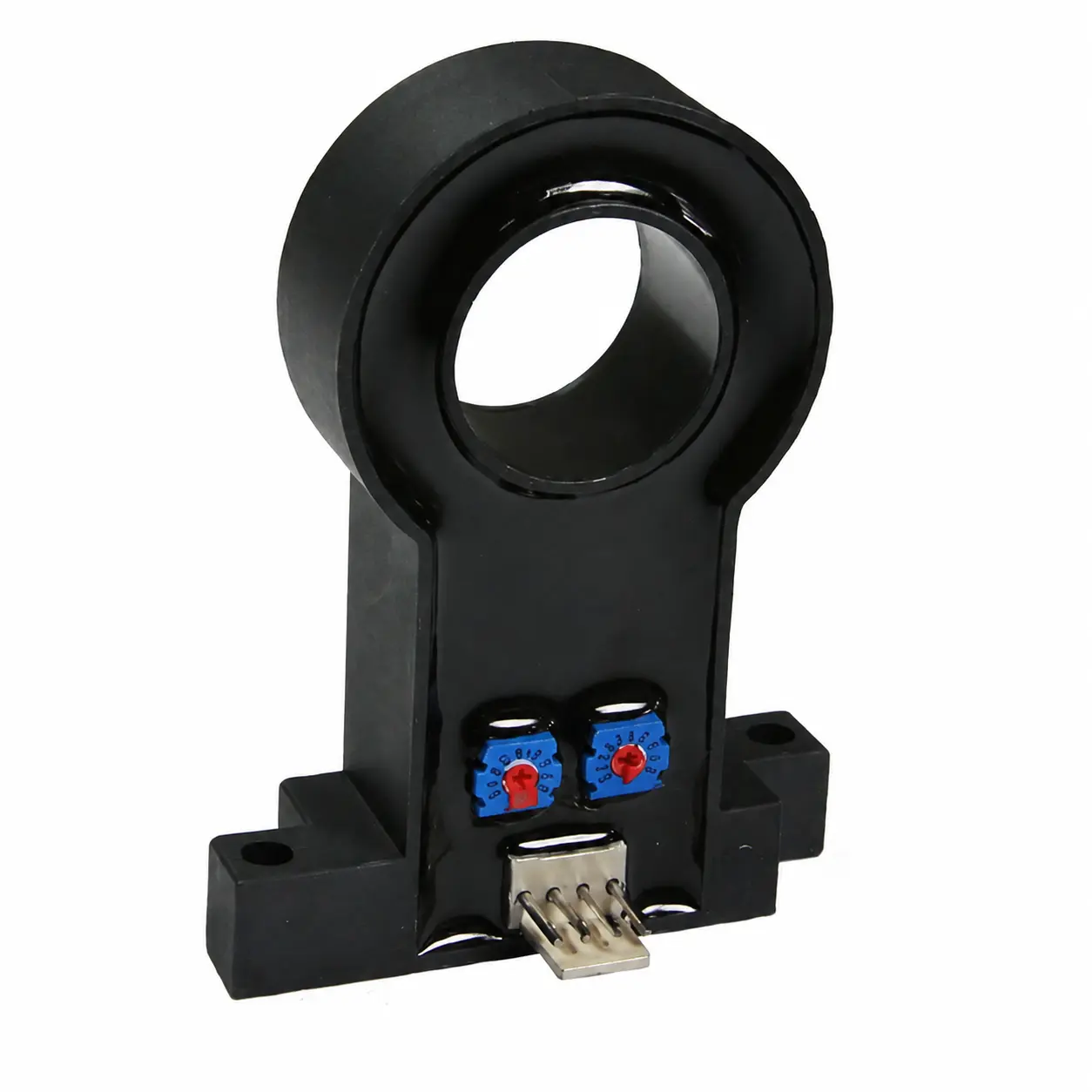
Start With the Current You Need to Measure
The first step is to define the current signal. Hall current sensors may be used for DC current, AC current, pulse current, or mixed current, but not every model is suitable for every waveform. The correct choice depends on the rated current, peak current, direction, waveform, frequency, and overload condition.
| Current Requirement | What to Confirm | Why It Matters |
|---|---|---|
| Current type | DC, AC, pulse, or mixed current | Determines the sensor principle and output design |
| Rated current | Normal continuous operating current | Prevents undersizing and signal saturation |
| Peak current | Overload, startup, braking, or fault current | Ensures the sensor can handle short-term conditions |
| Direction | Unidirectional or bidirectional current | Important for battery charge/discharge and motor control |
| Waveform | Sine wave, pulse, PWM, ripple, or irregular current | Affects response time and signal accuracy |
Choose the Right Output Signal
The output signal must match the receiving device. A PLC, display meter, controller, protection circuit, or data acquisition system may require a different signal type. Before ordering, confirm whether the system needs voltage output, current output, switch output, or a transmitter signal.
| Output Type | Typical Use | Selection Note |
|---|---|---|
| Voltage output | Controller, meter, signal acquisition | Confirm output range and reference voltage |
| Current output | Industrial control systems | Useful for longer signal transmission in cabinets |
| Transmitter output | PLC and monitoring systems | Often selected when a standard signal is required |
| Switch output | Overcurrent alarm, load detection, status monitoring | Confirm threshold and response condition |
| Custom signal | OEM equipment or special control logic | Requires clear input, output, and supply specifications |
If your project requires DC or AC current measurement and you are still comparing signal types, the related guide Hall Effect Current Sensor for DC and AC Current Measurement explains the measurement differences in more detail.
Check Accuracy, Linearity, and Drift
Accuracy requirements depend on how the signal is used. For simple current indication or threshold monitoring, moderate accuracy may be enough. For inverter control, servo systems, battery testing, or power conversion feedback, the project may require better linearity, lower zero offset, faster response, and lower temperature drift.
In general, open loop Hall current sensors are suitable for many standard industrial measurement applications. Closed loop Hall current sensors are preferred when higher accuracy and dynamic response are important. For the difference between these two structures, read Open Loop vs Closed Loop Hall Effect Current Sensors.
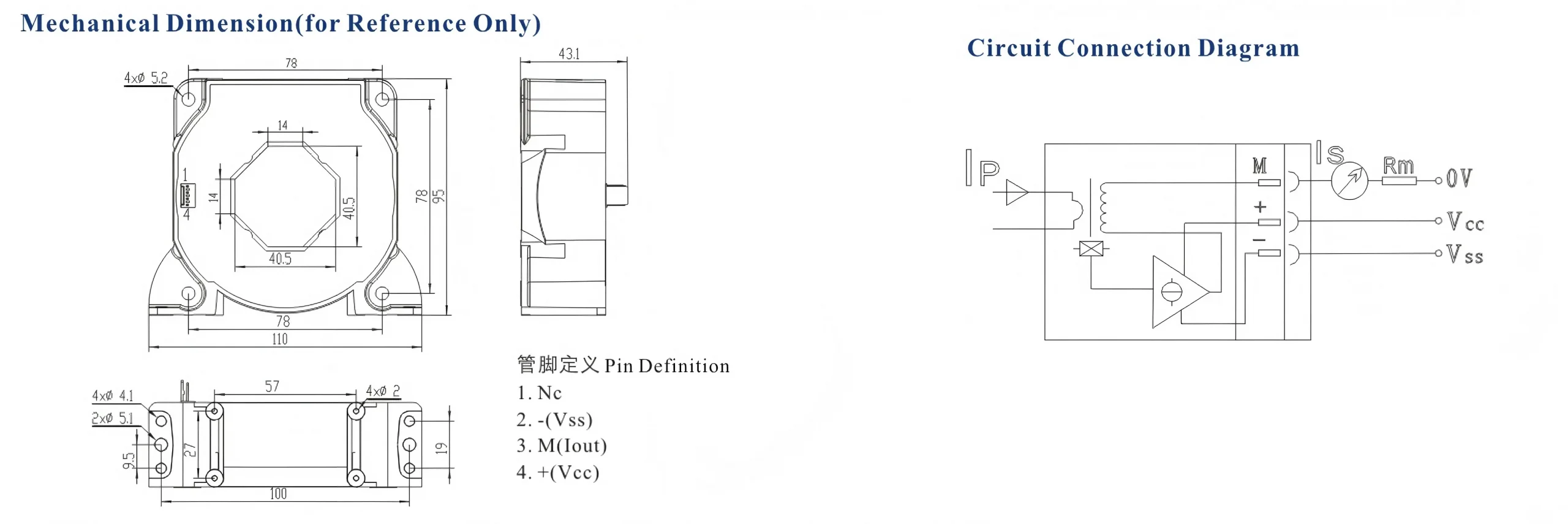
Confirm Aperture Size and Mounting Method
The mechanical structure is just as important as the electrical rating. The conductor, cable, or busbar must fit through the sensor aperture with enough installation clearance. If the sensor is installed in a crowded control cabinet, mounting holes, terminal direction, wiring access, and insulation distance should be checked before final selection.
| Mechanical Item | What to Confirm |
|---|---|
| Aperture size | Cable diameter, busbar size, and space for insulation |
| Mounting method | Screw mounting, panel mounting, PCB mounting, or custom fixing |
| Installation direction | Current direction, terminal direction, and wiring path |
| Cabinet space | Height, width, depth, and service clearance |
| Environmental condition | Temperature, vibration, humidity, and electrical noise |
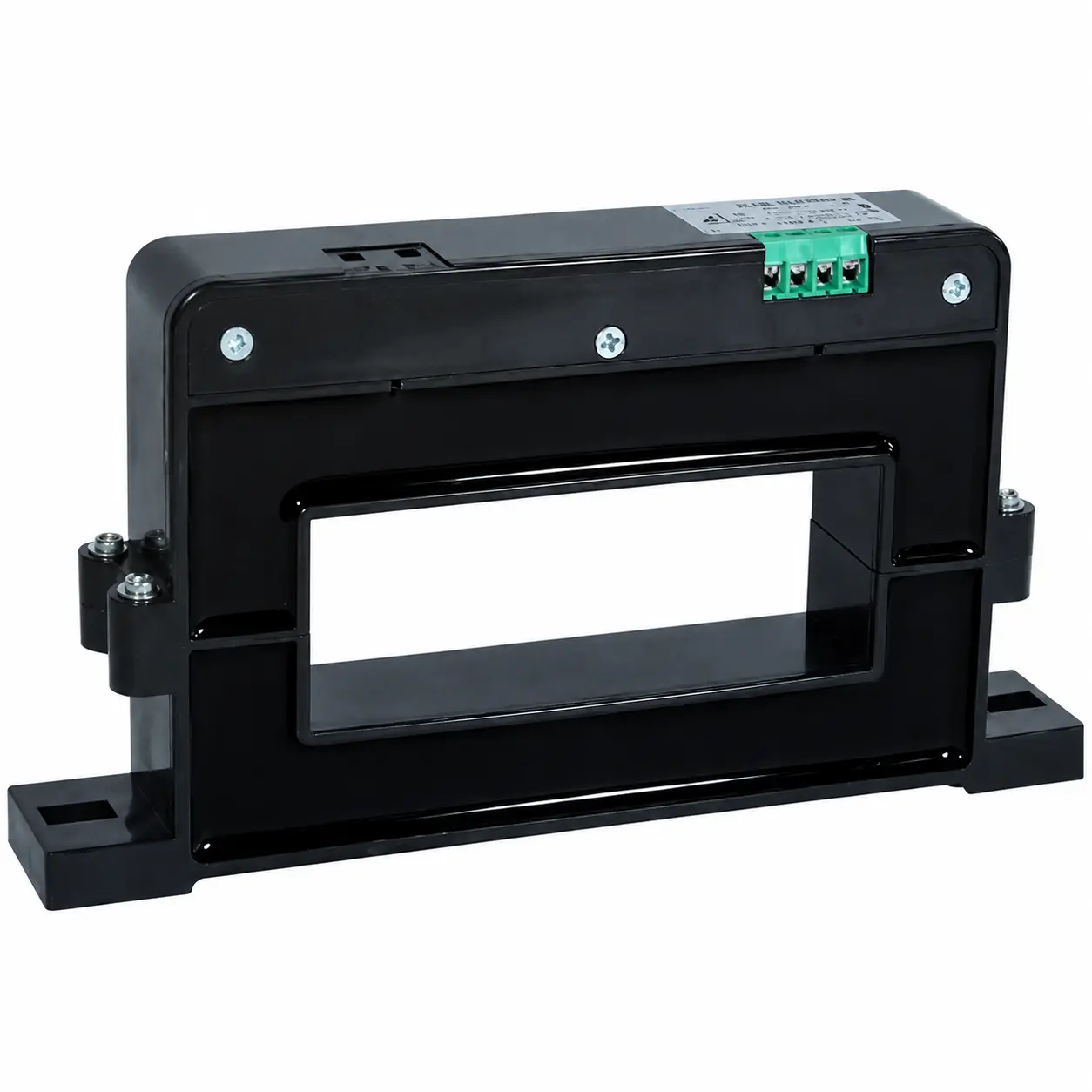
Match the Sensor to the Application
Different applications place different demands on the Hall current sensor. A battery system may need bidirectional DC measurement. A motor drive may need fast response. A protection circuit may only need a switching signal. A control cabinet may require a standard transmitter output for a PLC.
| Application | Typical Selection Focus |
|---|---|
| Battery and energy storage systems | DC current range, bidirectional measurement, drift, and output signal |
| Industrial drives and inverters | Response time, accuracy, linearity, and dynamic current feedback |
| Power supplies and converters | Current waveform, isolation, output signal, and temperature stability |
| Control cabinets | Signal compatibility, mounting space, wiring, and long-term reliability |
| Welding equipment | High current, pulse current, noise environment, and response requirement |
| Protection and alarm circuits | Current threshold, switch output, response condition, and reset logic |
For some high-current DC systems, engineers may compare Hall current sensors with DC current shunts. The better choice depends on whether the system needs isolated magnetic sensing or a precision millivolt signal from a shunt installed in the current path.
Hall Current Sensor Selection Checklist
Before sending an RFQ or selecting a model, prepare the following information. This makes model recommendation faster and reduces the risk of choosing a sensor that does not match the actual system.
| Selection Item | Information to Provide |
|---|---|
| Measured current | DC, AC, pulse, mixed current, rated current, and peak current |
| Output signal | Voltage, current, transmitter, switch output, or custom signal |
| Power supply | Available supply voltage and single or dual supply requirement |
| Accuracy | Accuracy class, linearity, response time, and drift requirement |
| Conductor size | Cable diameter, busbar size, or primary conductor layout |
| Mounting | Installation space, fixing method, terminal direction, and wiring path |
| Environment | Temperature, vibration, humidity, insulation, and noise conditions |
| Quantity and project use | Prototype, replacement, OEM equipment, or batch production |

How LEEYD Supports Hall Sensor Selection
LEEYD can support Hall current sensor selection based on measured current, output signal, accuracy requirement, power supply, aperture size, mounting structure, and application environment. Standard and project-based options are available for industrial current measurement and monitoring applications.
To request a recommendation, provide your current type, rated current, peak current, output signal, power supply, conductor size, installation space, and operating condition. You can contact LEEYD for Hall current sensor selection with your project details.
FAQ
How do I choose a Hall current sensor?
Start by confirming the measured current type, rated current, peak current, output signal, power supply, accuracy requirement, aperture size, and mounting method. Then match the sensor structure to the application.
What output signal should I choose?
Choose the output signal according to the receiving device. A PLC, display meter, controller, or alarm circuit may require voltage output, current output, transmitter output, switch output, or a custom signal.
When should I choose a closed loop Hall current sensor?
Choose a closed loop Hall current sensor when the system needs higher accuracy, better linearity, faster response, and lower drift for control, testing, or precision current feedback.
Does aperture size affect sensor selection?
Yes. The cable or busbar must fit through the sensor aperture with enough clearance. Mounting space, wiring direction, and insulation distance should also be checked.
Can LEEYD help recommend a Hall current sensor model?
Yes. LEEYD can review the current range, output signal, power supply, aperture size, accuracy requirement, and application conditions to recommend a suitable Hall current sensor.