
Surge arrester and lightning arrester are often used as similar terms in power system projects. In many medium-voltage and high-voltage applications, buyers may see both names used for devices that protect electrical equipment from transient overvoltage. However, the two terms are not always used in exactly the same way, especially when comparing product standards, installation locations, and system protection requirements.
This guide explains the practical difference between a surge arrester and a lightning arrester, where each term is used, and what engineers should confirm before selecting an arrester for transformers, switchgear, distribution lines, substations, or industrial power systems.
Quick Answer: Are Surge Arresters and Lightning Arresters the Same?
In many real purchasing situations, the terms overlap. A lightning arrester is commonly discussed when the main protection target is lightning-induced overvoltage. A surge arrester is a broader term that can include protection against lightning surges, switching surges, and other transient overvoltage events in an electrical system.
For modern power distribution and substation projects, zinc oxide or metal oxide arresters are often used for both purposes. That is why buyers may search for zinc oxide lightning arresters, metal oxide surge arresters, or ZnO surge arresters when looking for similar product solutions.
| Comparison Item | Surge Arrester | Lightning Arrester |
|---|---|---|
| Main meaning | Broader term for transient overvoltage protection | Often refers to protection against lightning overvoltage |
| Common cause covered | Lightning surge, switching surge, system transient | Lightning strike or lightning-induced surge |
| Typical application | Transformers, switchgear, substations, lines, industrial systems | Overhead lines, transformers, buildings, power equipment |
| Power industry usage | Common in medium-voltage and high-voltage equipment | Common in general electrical and lightning protection discussions |
| Modern product type | Often zinc oxide / metal oxide gapless arrester | Often zinc oxide / metal oxide arrester in power systems |
What Is a Surge Arrester?
A surge arrester is an overvoltage protection device installed between a conductor and ground. Under normal operating voltage, it remains in a high-resistance state. When a transient overvoltage occurs, the arrester conducts surge current to ground and helps limit the voltage applied to the protected equipment.
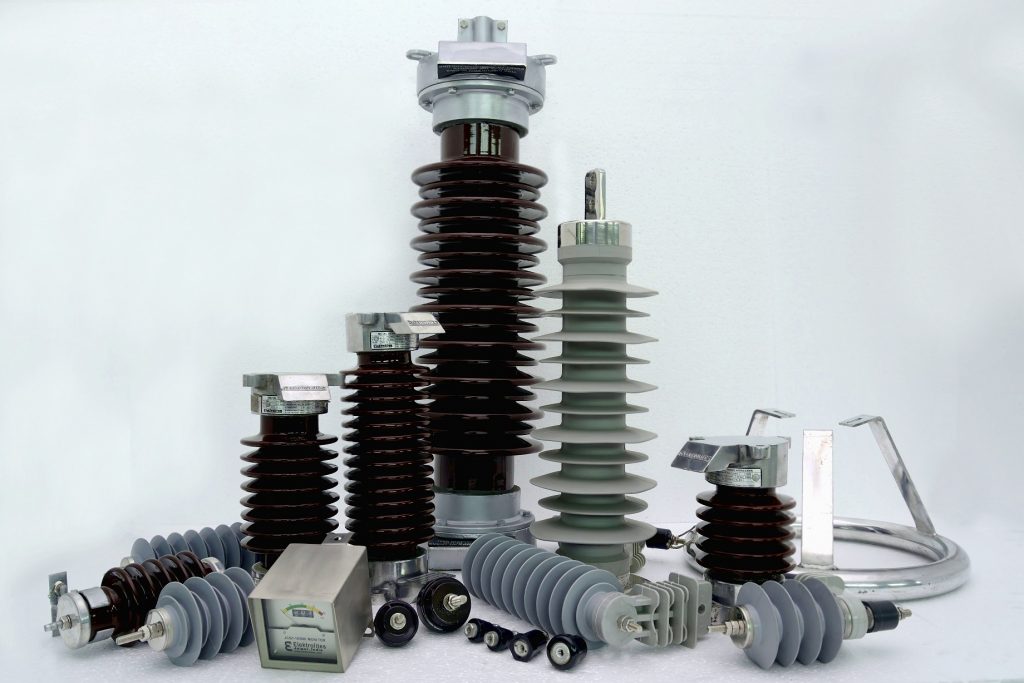
Surge arresters are widely used in distribution systems, substations, switchgear, transformers, overhead lines, cable systems, and industrial electrical installations. In modern power systems, many surge arresters use zinc oxide varistor blocks because they respond quickly and provide stable nonlinear protection.
For a deeper explanation of ZnO arrester construction and selection parameters, see our zinc oxide surge arrester guide.
What Is a Lightning Arrester?
A lightning arrester is a protection device used to reduce the impact of lightning overvoltage on electrical equipment. In power distribution and transmission systems, it helps discharge lightning surge current and protect insulation from excessive voltage stress.
The term lightning arrester is often used by buyers who are focused on outdoor power lines, transformers, switchgear, and electrical equipment exposed to lightning activity. For example, a buyer working on a 10kV distribution system may search for a 10kV lightning arrester even when the actual product is a zinc oxide surge arrester designed for medium-voltage protection.
The Real Difference Is Often the Application Context
For engineering buyers, the most important difference is usually not the name printed on a brochure. The important question is what type of overvoltage the system must handle and what electrical parameters the arrester must meet.
- If the concern is lightning exposure: the buyer may call the product a lightning arrester.
- If the concern includes switching surges and general transient overvoltage: the buyer may call it a surge arrester.
- If the product is for medium-voltage or high-voltage equipment: the actual design is often a zinc oxide or metal oxide arrester.
- If the project requires condition observation: the arrester may be paired with arrester monitoring solutions such as surge counters or leakage current monitors.
Where Are They Installed?
Both surge arresters and lightning arresters can be installed in different parts of a power system. The installation position depends on the protected equipment, system voltage, grounding method, and expected surge path.
| Installation Area | Typical Purpose | Common Buyer Search Term |
|---|---|---|
| Distribution transformer | Protect transformer insulation from lightning and line surges | `lightning arrester for transformer` |
| Medium-voltage switchgear | Limit transient overvoltage entering switchgear equipment | `medium voltage surge arrester` |
| Overhead distribution line | Reduce line failures caused by lightning-induced surges | `distribution surge arrester` |
| Substation | Protect transformers, busbars, breakers, and connected equipment | `substation surge arrester` |
| Industrial power system | Protect electrical assets from transient overvoltage | `surge arrester for power system` |
How to Choose the Right Arrester
Instead of selecting only by the term surge arrester or lightning arrester, confirm the technical requirements first. A suitable arrester should match the system and installation conditions.
- Confirm the system voltage and rated voltage requirement.
- Check the continuous operating voltage and grounding method.
- Confirm nominal discharge current and protection level.
- Choose polymer or porcelain housing according to environment and project standards.
- Confirm indoor or outdoor installation, mounting bracket, and terminal structure.
- Check whether a disconnector, surge counter, or arrester monitor is required.
- Provide an existing model, drawing, datasheet, or project specification for cross-checking.
When Should You Use Each Term?
If you are preparing an RFQ or comparing supplier documents, use the term that best matches the project language. For general power system overvoltage protection, surge arrester is usually the broader and more technical term. For lightning-related distribution protection, lightning arrester is still commonly understood by buyers and engineers.
For LEEYD product selection, you can use either term as long as the technical details are clear. Our team will normally confirm the voltage class, system type, discharge current, housing material, installation method, and required accessories before recommending a model.
FAQ
Is a surge arrester different from a lightning arrester?
In strict usage, a surge arrester is a broader term for transient overvoltage protection, while a lightning arrester focuses on lightning-related overvoltage. In many power system projects, the terms are used interchangeably.
Can a zinc oxide arrester be called a lightning arrester?
Yes. A zinc oxide arrester used to protect equipment from lightning-induced overvoltage is often called a zinc oxide lightning arrester or metal oxide lightning arrester.
Which term should I use when requesting a quote?
You can use either term, but include the technical details: voltage level, system grounding, installation location, discharge current, housing type, accessories, and quantity. These details matter more than the wording.
Do surge arresters need monitoring?
For critical substations and utility systems, surge counters, leakage current monitors, or digital arrester monitors may be used to support inspection and maintenance. Monitoring is not required for every installation, but it is useful where operating history and condition tracking are important.
What should I send to LEEYD for model selection?
Please send the voltage level, system type, installation environment, required discharge current, housing preference, accessories, quantity, and any drawing or existing model reference. You can contact LEEYD for arrester selection support.