
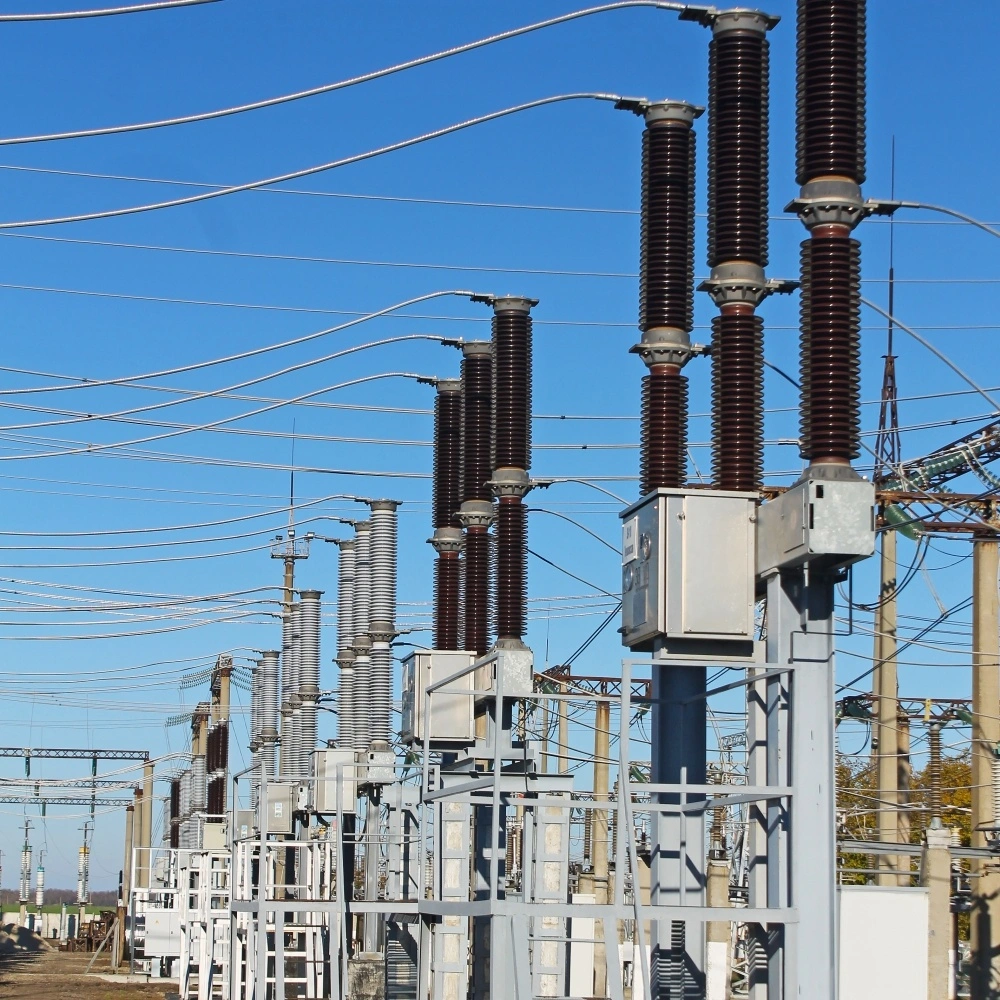
A zinc oxide surge arrester is used to protect power equipment from lightning overvoltage and switching surges. In medium-voltage and high-voltage systems, it provides a controlled path for surge current and helps limit the voltage stress applied to transformers, switchgear, overhead lines, cables, and other insulation systems.
For buyers and engineers, the important question is not only what a zinc oxide surge arrester is. The more practical question is how to select the correct arrester for the system voltage, installation environment, insulation coordination, discharge current requirement, and maintenance plan. This guide explains the working principle, structure, common applications, and key selection points for zinc oxide surge arresters.
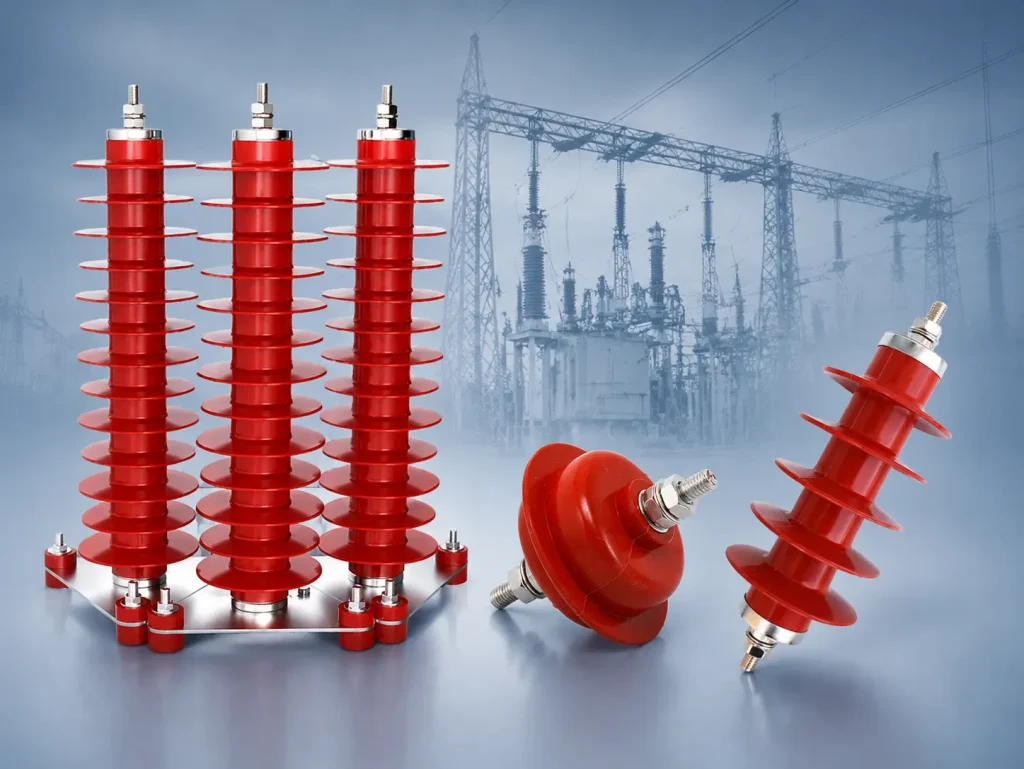
What Is a Zinc Oxide Surge Arrester?
A zinc oxide surge arrester, also called a metal oxide surge arrester or ZnO arrester, is an overvoltage protection device made with zinc oxide varistor blocks. Under normal operating voltage, the arrester remains in a high-resistance state and allows only a very small leakage current. When a lightning surge or switching surge appears, the varistor blocks quickly become conductive and discharge the surge current to ground.
After the surge passes, the arrester returns to its high-resistance state. This nonlinear voltage-current behavior is the main reason zinc oxide arresters are widely used in modern power systems. Compared with older gapped arrester designs, gapless zinc oxide arresters can respond quickly and provide more stable protective performance.
If you need a product-level overview, voltage class options, and model selection support, visit our zinc oxide lightning arrester products page.
How Does a Zinc Oxide Surge Arrester Work?
The working principle of a zinc oxide surge arrester depends on the nonlinear electrical characteristics of metal oxide varistors. At normal system voltage, the arrester behaves almost like an insulator. When the voltage rises above the designed protection level, the resistance drops sharply, allowing surge energy to flow through the arrester instead of through the protected equipment.
This process helps limit residual voltage across the protected equipment. The lower and more stable the residual voltage, the better the protection for insulation systems. In real projects, the arrester must be selected according to the system voltage, grounding method, continuous operating voltage, nominal discharge current, pollution level, and expected surge duty.
- Normal operation: the arrester carries only small leakage current.
- Surge event: zinc oxide varistors conduct and discharge surge current.
- After discharge: the arrester returns to high resistance and continues standby protection.
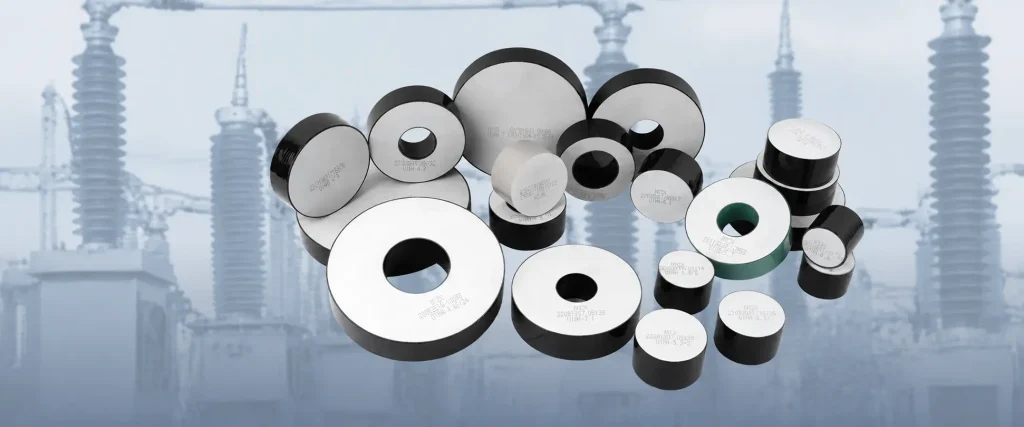
Main Construction of a Zinc Oxide Surge Arrester
Although designs vary by voltage class, housing material, and installation method, a typical zinc oxide surge arrester includes several key parts. Each part affects electrical performance, mechanical reliability, and long-term service life.
| Component | Function | What Buyers Should Confirm |
|---|---|---|
| Zinc oxide varistor blocks | Limit overvoltage and discharge surge current | Rated voltage, residual voltage, nominal discharge current |
| Insulating housing | Provides insulation and environmental protection | Polymer or porcelain housing, creepage distance, pollution level |
| End fittings | Connect the arrester to the line and grounding system | Mounting method, terminal type, mechanical strength |
| Sealing structure | Protects internal components from moisture | Outdoor rating, humidity resistance, long-term reliability |
| Disconnector or indicator | Supports maintenance and failure identification | Required for distribution network or utility standards |
Common Applications
Zinc oxide surge arresters are used wherever electrical equipment needs protection from transient overvoltage. The correct arrester type depends on the voltage level, insulation coordination requirement, installation location, and protected equipment.
- Distribution transformers: protect transformer insulation against lightning surges on overhead lines.
- Switchgear and ring main units: limit incoming surge voltage in medium-voltage distribution systems.
- Overhead distribution lines: reduce lightning-related failures in exposed networks.
- Substations: protect transformers, busbars, breakers, and connected equipment.
- Industrial power systems: protect electrical infrastructure in factories, mining sites, and energy facilities.
For 10kV projects, the arrester should be checked against the local system voltage, insulation level, grounding method, and installation environment. You can read our 10kV lightning arrester selection guide for a more focused explanation.
Key Specifications to Confirm Before Ordering
For procurement, the safest approach is to confirm the electrical and mechanical requirements before selecting the model. A surge arrester that looks similar on the outside may have different voltage ratings, discharge current capacity, housing material, and installation requirements.
| Specification | Why It Matters | Example Information to Provide |
|---|---|---|
| Rated voltage | Must match system insulation and operating conditions | 10kV, 11kV, 12kV, 24kV, 33kV, 35kV |
| MCOV / continuous operating voltage | Prevents overheating under normal operation | System voltage and grounding method |
| Nominal discharge current | Defines surge current handling capacity | 5kA, 10kA, or project-specific requirement |
| Residual voltage | Affects protection level for equipment insulation | Required insulation coordination level |
| Housing material | Affects outdoor durability and mechanical performance | Polymer, porcelain, silicone rubber |
| Installation type | Determines mechanical compatibility | Indoor, outdoor, line-mounted, switchgear-mounted |
| Accessories | Supports maintenance and monitoring | Disconnector, bracket, surge counter, arrester monitor |
Zinc Oxide Surge Arrester vs Lightning Arrester
In many power industry searches, buyers use the terms zinc oxide surge arrester, zinc oxide lightning arrester, metal oxide surge arrester, and lightning arrester interchangeably. Strictly speaking, a lightning arrester is mainly discussed in the context of lightning overvoltage, while a surge arrester can also include switching overvoltage and other transient events.
For medium-voltage distribution and industrial power systems, zinc oxide surge arresters are commonly used as lightning and overvoltage protection devices. When comparing suppliers, focus less on terminology and more on rated voltage, discharge current, housing design, standards, installation method, and test documentation.
When Should You Use an Arrester Monitor?
In critical substations or utility networks, surge arresters may be used together with monitoring devices. A surge counter records discharge events, while an arrester monitor can help observe leakage current and condition trends. This is useful when maintenance teams need a clearer view of arrester operating history and potential degradation.
For projects that require surge event counting, leakage current indication, or remote condition monitoring, see our arrester monitoring solutions.
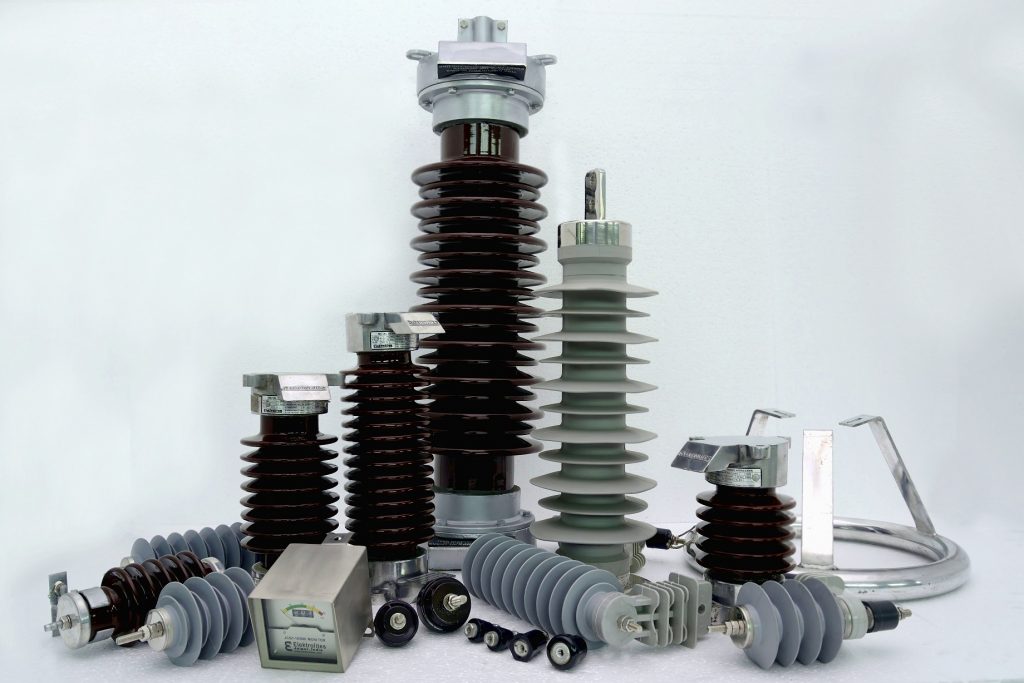
How to Choose the Right Zinc Oxide Surge Arrester
Before ordering, prepare the system and installation information first. This helps the supplier recommend the correct arrester rather than only matching a similar-looking product photo.
- Confirm the system voltage and rated voltage requirement.
- Provide the grounding method and continuous operating voltage.
- Confirm indoor or outdoor installation conditions.
- Check the required nominal discharge current and protection level.
- Choose polymer or porcelain housing based on environment and project standards.
- Confirm mounting brackets, terminals, disconnectors, and monitoring accessories.
- Share any drawing, datasheet, or existing model reference for cross-checking.
LEEYD supports zinc oxide arrester selection for distribution lines, transformers, switchgear, substations, industrial power systems, and related monitoring applications. If your project also includes GIS equipment, you can review our GIS surge arresters page as a supporting reference, although standard zinc oxide arresters remain the main product direction for this content cluster.
FAQ
What is the main advantage of a zinc oxide surge arrester?
The main advantage is the nonlinear behavior of zinc oxide varistors. They remain highly resistive during normal operation and quickly conduct during overvoltage events, helping discharge surge current and limit residual voltage.
Is a zinc oxide surge arrester the same as a metal oxide surge arrester?
In most power system contexts, yes. Zinc oxide is the key metal oxide material used in modern metal oxide surge arresters, so the terms are often used together or interchangeably.
How do I choose a 10kV zinc oxide surge arrester?
Check the system voltage, MCOV, grounding method, nominal discharge current, installation location, housing type, creepage distance, and accessories. For 10kV systems, do not select only by the nominal voltage name; confirm the actual network and insulation requirements.
Where are zinc oxide surge arresters installed?
They are commonly installed near transformers, switchgear, overhead line entrances, cable terminations, substations, and other equipment that needs overvoltage protection.
What information should I send for model recommendation?
Please provide voltage level, system grounding method, installation location, required discharge current, housing preference, accessories, quantity, and any existing model or drawing. You can contact LEEYD for model recommendation and technical support.
Choosing the correct zinc oxide surge arrester requires both electrical and installation details. Send us your voltage level, application, installation environment, quantity, and any technical drawing or existing model reference so our team can recommend a suitable arrester configuration for your power protection project.